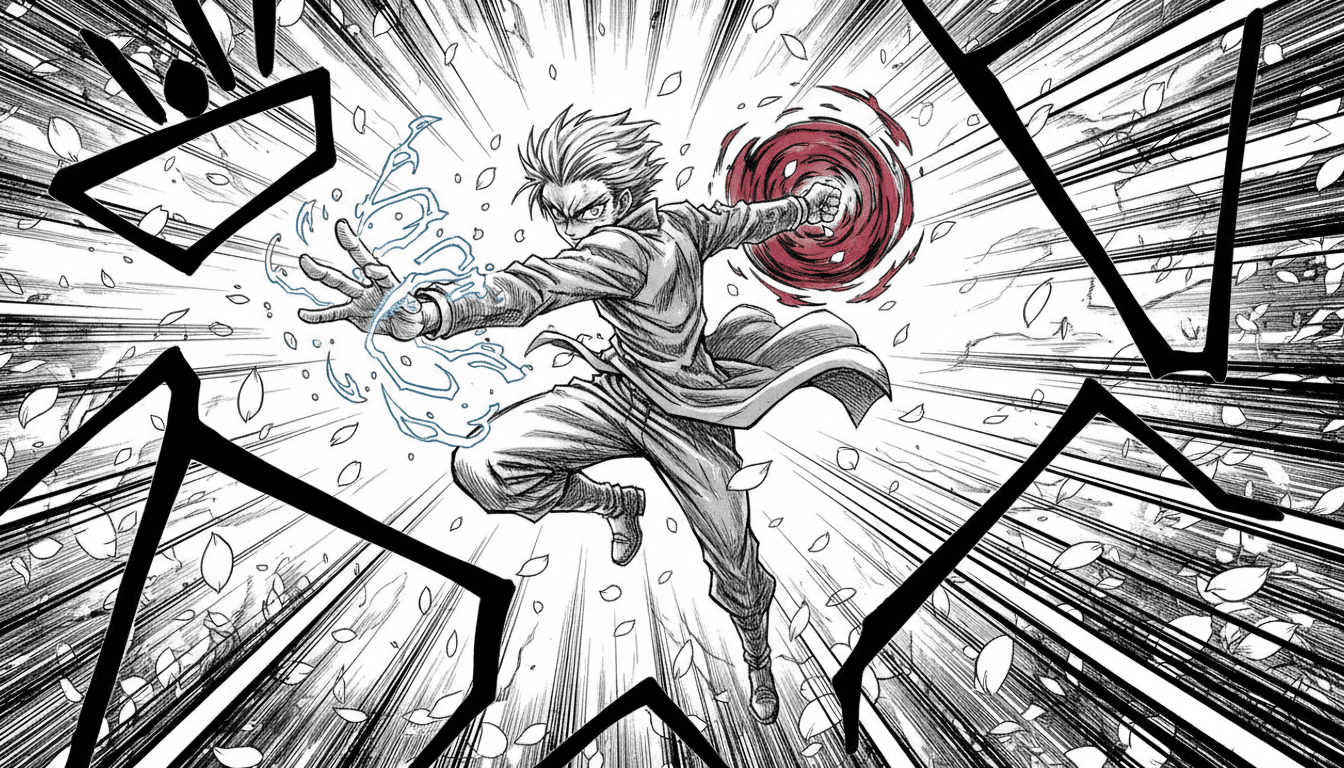
Manga is more than just a comic style — it's the world's most popular visual storytelling medium. With a global market worth over $16 billion and 72% of consumption happening digitally, manga has grown from its Japanese origins into a truly global phenomenon that influences everything from fashion to film. The distinctive art style — with its expressive eyes, dynamic action lines, and emotional depth — has captivated readers across every continent and culture.
Now, thanks to AI art generation, anyone can create authentic manga art. You don't need years of practice mastering screentones and speed lines. Whether you want to create a shonen battle epic, a shojo romance, or a slice-of-life seinen story, AI manga generators let you bring your vision to life with professional-quality results.
What Defines Manga Art Style?
Manga has a visual language that's instantly recognizable even to casual observers. Here are the defining characteristics that separate manga from other comic styles:
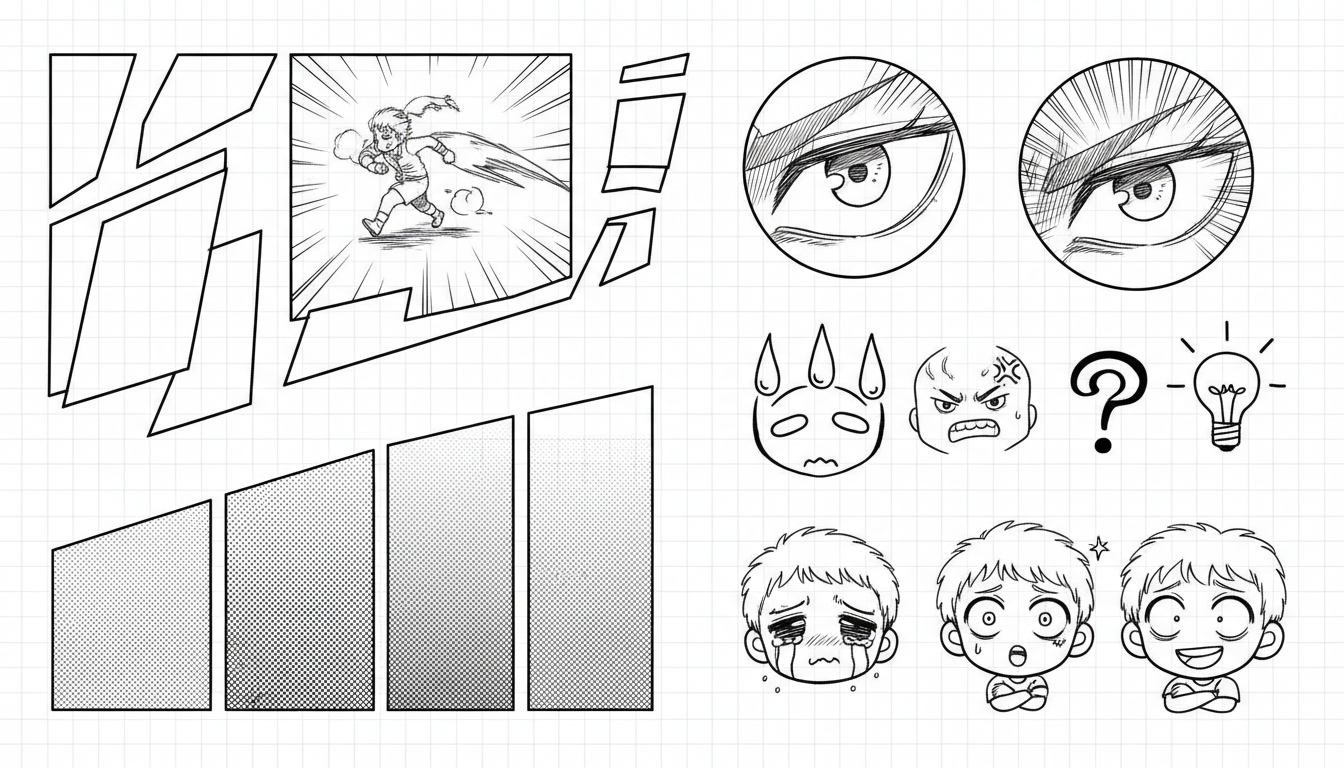
- Expressive eyes. Large, detailed eyes are manga's most iconic feature. Eyes convey the full range of emotions — from determination to heartbreak — and are often the most detailed element on a character's face.
- Dynamic panel layouts. Unlike Western comics that typically use a grid, manga panels break boundaries. Diagonal cuts, overlapping frames, borderless panels, and dramatic full-page spreads create a sense of movement and rhythm.
- Speed lines and motion effects. Action in manga isn't static. Speed lines, motion blur, impact stars, and energy effects make static images feel dynamic and alive.
- Emotion symbols. Sweat drops for nervousness, anger veins, sparkly backgrounds for romance, mushroom sighs for defeat — manga has a rich visual vocabulary for expressing emotions.
- Screentones and hatching. Traditional manga uses screentone patterns (dot patterns of varying density) for shading, creating a distinctive look that separates it from digitally shaded art.
- Black and white mastery. While color manga exists, the art form is built on masterful use of black, white, and gray. High contrast creates drama and readability.
Manga Sub-Styles Explained
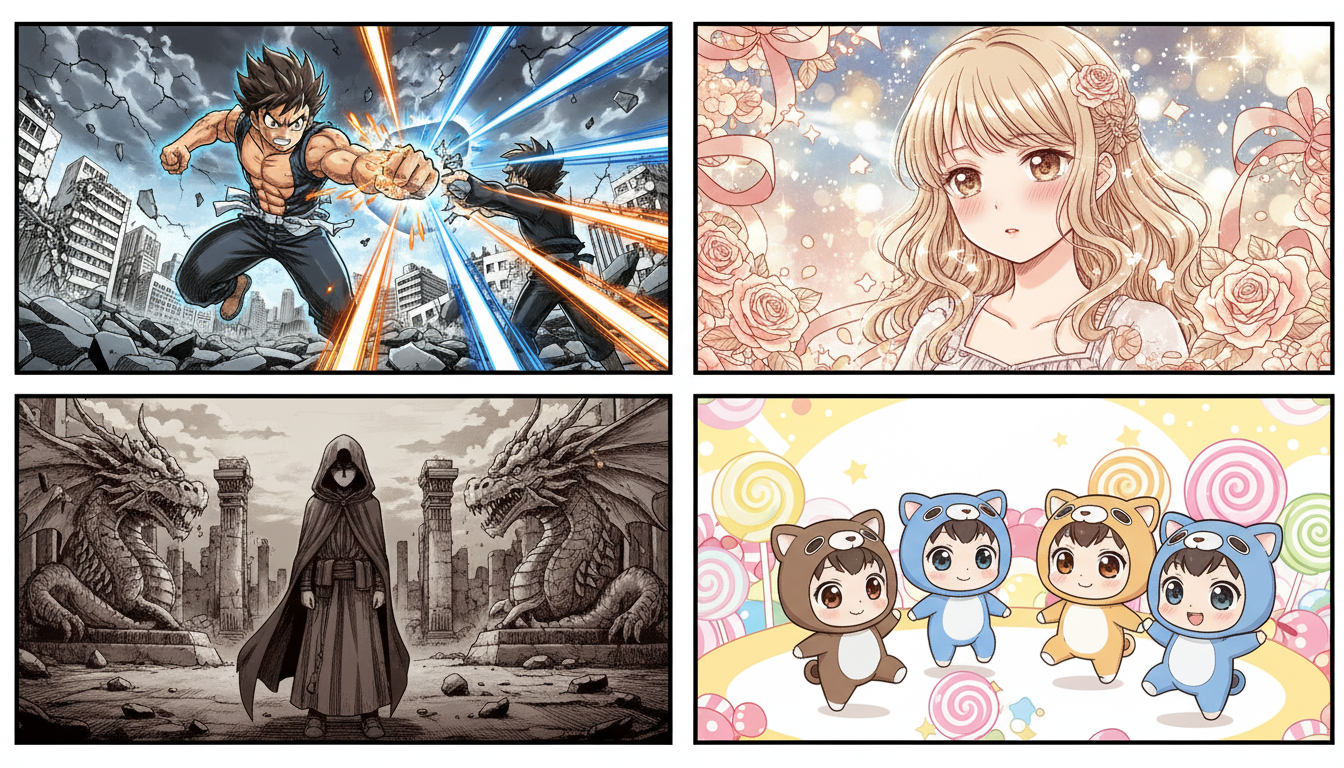
Not all manga looks the same. Different genres have developed distinct visual sub-styles, each with its own conventions and aesthetics:
Shonen (Action & Adventure)
The most commercially popular manga genre. Think Dragon Ball, Naruto, One Piece, and My Hero Academia. Shonen manga features bold, dynamic art with intense action sequences, muscular characters, dramatic power-ups, and explosive energy effects. The art emphasizes movement, impact, and scale — battles feel epic, and character transformations are visually spectacular.
Shojo (Romance & Emotions)
The art of feelings. Shojo manga — like Sailor Moon, Fruits Basket, and Ouran High School Host Club — features elegant character designs with large, luminous eyes, flowing hair, and delicate features. Backgrounds often dissolve into abstract flowers, sparkles, and emotional effects. Panel layouts are fluid and artistic, with characters sometimes breaking frame boundaries. The art prioritizes beauty and emotional resonance.
Seinen (Mature & Atmospheric)
Aimed at adult readers, seinen manga like Berserk, Vagabond, and Ghost in the Shell features more realistic proportions, detailed backgrounds, atmospheric shading, and complex compositions. The art is often darker and more nuanced, with sophisticated use of shadow and texture. Less reliant on emotion symbols and more on subtle visual storytelling.
Chibi (Cute & Comedic)
Chibi style reduces characters to cute, exaggerated forms with oversized heads, tiny bodies, and simplified features. Used extensively in comedy scenes, merchandise, and lighthearted content. Even serious manga series include chibi moments for comic relief.
How to Create Manga Art with AI
Creating manga with AI is straightforward once you understand the tools and options available. Here's how to get started with iCartoon's manga art style:
From Text to Manga
Use the AI Comic Creator and select the Manga style. Write your story — describe your characters, their personalities, the setting, and the plot. The AI generates multi-page manga with consistent character designs, dynamic panel layouts, and authentic manga visual effects.
For the best manga results, include action-oriented descriptions: "Kai clenches his fist as energy swirls around him" produces more dynamic manga art than "Kai stands in a room."
From Photos to Manga
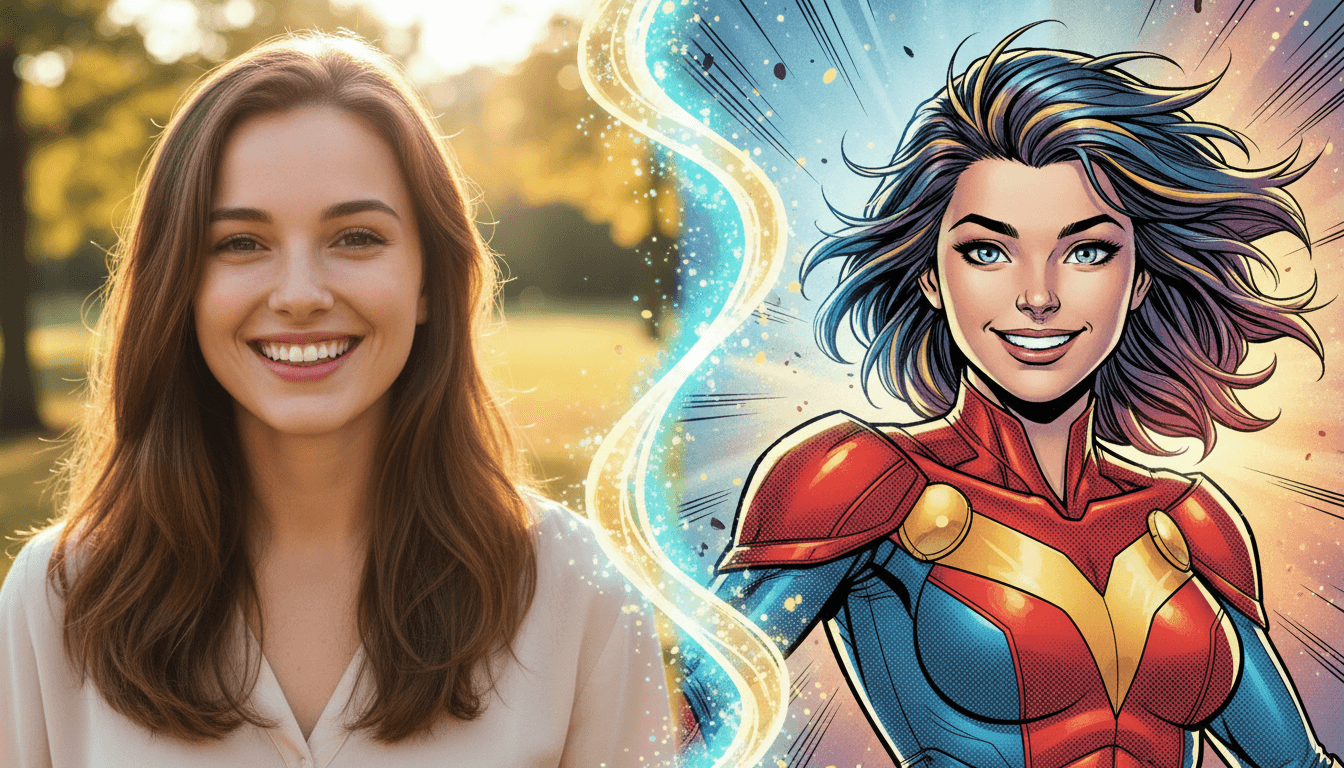
Upload any photo and convert it to manga style. Portraits become manga characters with expressive eyes and dynamic styling. Landscapes gain the dramatic compositions and atmospheric effects of manga backgrounds. This is a great way to create manga versions of yourself, friends, or family.
Building a Manga Series
The real power comes from creating ongoing manga series. Start with a pilot chapter — introduce your characters, establish the world, and set up the conflict. Then continue with additional chapters. The AI maintains character consistency across episodes, so your protagonist looks the same whether they're in chapter 1 or chapter 10.
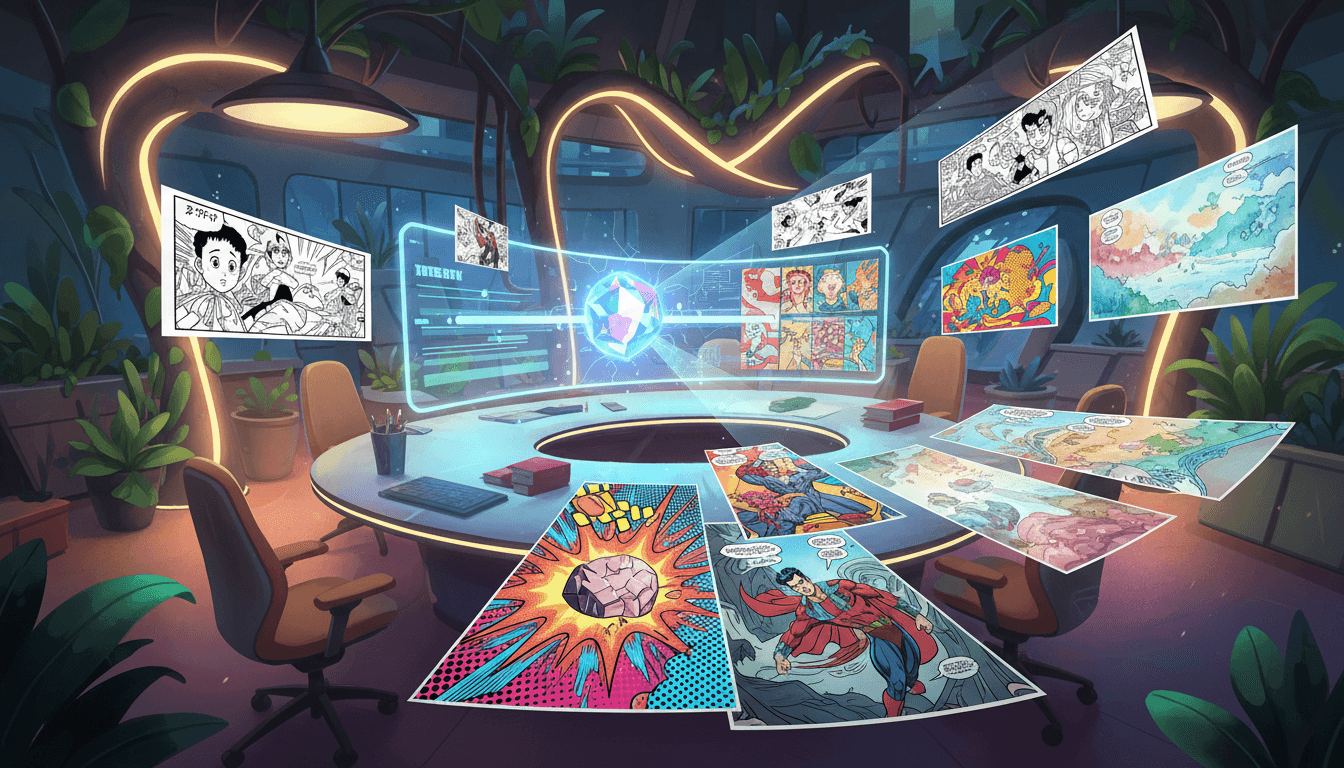
Manga vs Webtoon vs American Comics
Understanding the differences between these three major comic traditions helps you choose the right style for your story:
- Manga — Read right-to-left (though AI versions are typically left-to-right for Western audiences). Black and white with screentone shading. Dynamic panel layouts. Serialized in chapters. Strong emphasis on character expression and emotional beats.
- Webtoon — The digital-native format from Korea. Full color, designed for vertical scrolling on mobile. Clean digital art style with solid colors. More accessible panel layouts. Growing rapidly in global popularity.
- American Comics — Full color, grid-based panel layouts, detailed muscular character designs. Strong emphasis on action and heroism. Speech bubbles carry more narrative weight. More collaborative (separate writer, penciler, inker, colorist).
Each tradition has its strengths. Manga excels at emotional storytelling and dynamic action. Webtoon is optimized for mobile reading. American comics offer rich, detailed full-color worlds. With AI tools, you can experiment with all three to find what suits your story best.
Create Your Own Manga
From shonen action to shojo romance — create authentic manga art with AI. No drawing skills needed.
Start Creating Manga →Prompt Tips for Better Manga Art
The way you describe your story significantly affects the quality of AI-generated manga. Here are tips for writing prompts that produce the best manga results:
- Include action and emotion words. "A warrior leaps through the air with fierce determination" produces far more dynamic manga than "a person standing." Verbs like leap, clash, shout, whisper, and gaze trigger manga's dynamic visual conventions.
- Specify the sub-genre. Mentioning "shonen-style" or "shojo-style" in your description helps the AI apply the right visual conventions. A "shonen battle" scene looks very different from a "shojo confession" scene.
- Describe environments. Manga backgrounds are important. A rooftop at sunset, a crowded festival, a dark forest — environmental details create atmosphere and depth in your panels.
- Use contrast and drama. Manga thrives on dramatic moments. Big reveals, emotional confrontations, power transformations — lean into dramatic beats for visually striking manga pages.
- Think about pacing. Alternate between action-packed and quiet moments. A tense battle scene followed by a peaceful sunset creates rhythm that feels authentically manga.
Creating a Manga Series
The most rewarding manga experience is building an ongoing series. Here's how to structure one:
- Start with a pilot. Create a 6-8 page first chapter that introduces your main character, establishes the world, and hooks the reader with a compelling conflict or mystery.
- Develop your cast. Add supporting characters gradually. Each new character should bring a different dynamic to the story. Rivals, mentors, comic relief, and love interests create the ensemble cast manga is known for.
- Plan story arcs. Manga series typically have arcs — self-contained storylines within the larger narrative. Plan 3-5 chapter arcs that resolve a specific conflict while advancing the overall plot.
- End chapters with hooks. Every chapter should end with something that makes the reader want to continue — a revelation, a cliffhanger, a new threat, or an emotional moment.
- Stay consistent. Use the same art style and continue from previous chapters. The AI maintains character consistency, but keeping your story coherent is your job as the creator.
Frequently Asked Questions
Can AI create authentic-looking manga?
Yes. Modern AI manga generators produce art that captures the essential elements of manga — expressive eyes, dynamic compositions, speed lines, screentone effects, and emotional visual language. The results are consistently impressive and recognizable as manga.
What's the difference between manga and anime style?
Manga refers to printed comics (black and white, panels, screentones). Anime refers to animation (full color, motion). Both share similar character design conventions but have different visual techniques. AI tools primarily generate manga-style static images, though the character aesthetic is similar to anime.
Can I create manga in color?
While traditional manga is black and white, AI generators can create full-color manga art. You can choose between authentic B&W manga or vibrant color versions depending on your preference.
How long should a manga chapter be?
Professional manga chapters typically run 18-24 pages. For AI-created manga, 6-12 pages per chapter is a sweet spot — long enough for meaningful storytelling, manageable enough for creation and reading.
Can I mix manga with other styles?
Absolutely. Many creators use manga for action scenes and switch to chibi for comedy moments, or combine manga characters with Ghibli-style backgrounds. AI tools make style mixing easy.
Manga is a rich, expressive art form with decades of tradition behind it. With AI tools, the barrier to entry has disappeared — you no longer need to master complex drawing techniques to tell stories in this powerful visual medium. Whether you dream of creating the next great shonen epic, a heartfelt shojo romance, or a thoughtful seinen drama, the tools are here and they're waiting for your story. Start creating manga today.