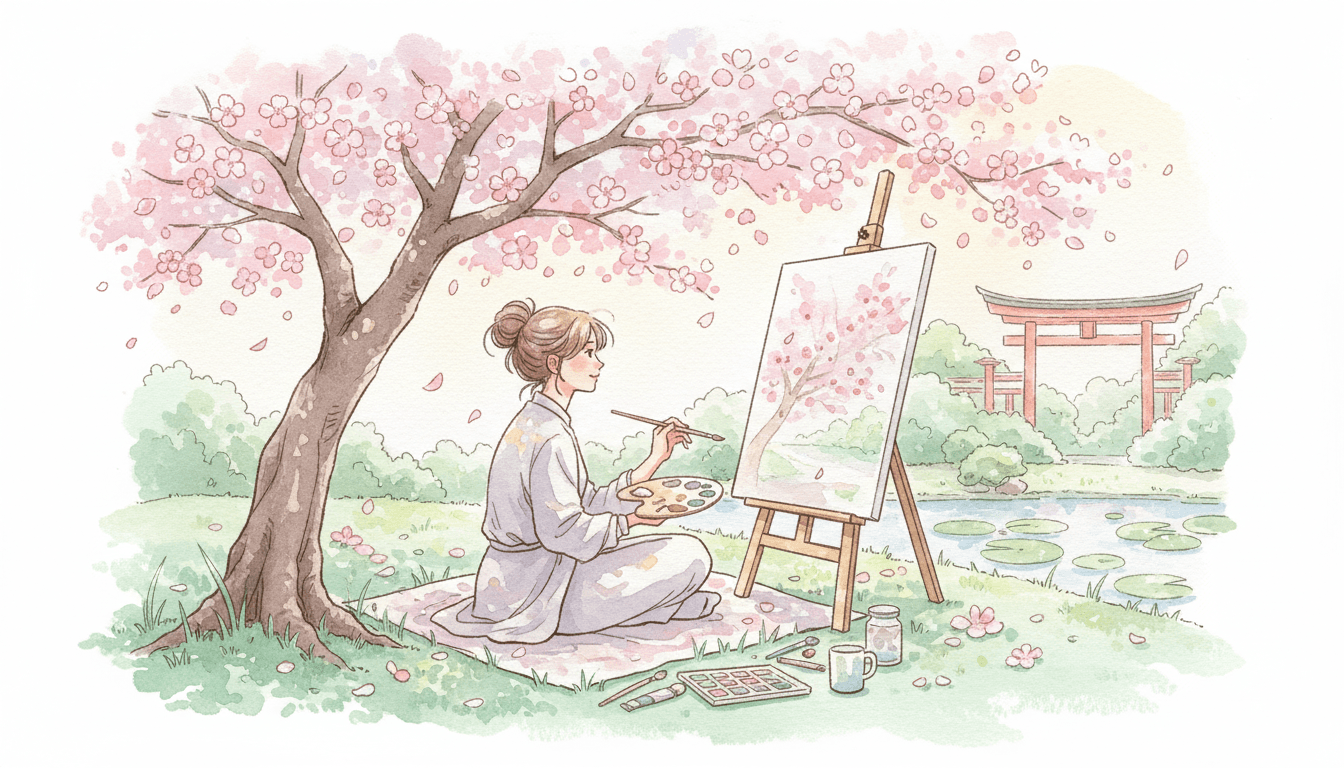
There's a reason watercolor has been the medium of choice for some of the world's most beloved illustrations for centuries. From Beatrix Potter's Peter Rabbit to Quentin Blake's illustrations for Roald Dahl, from classic botanical drawings to modern picture books — watercolor carries an emotional warmth that no other medium quite replicates. The way colors bleed into each other, the visible texture of paper beneath translucent washes, the happy accidents where pigment pools and blooms — all of these create art that feels alive, organic, and deeply human.
Now imagine that warmth and beauty applied to comic storytelling. Watercolor comics combine the sequential narrative power of comics with the emotional depth of fine art painting. The result is a style that's perfect for stories that need to feel personal, warm, and beautiful — love stories, children's tales, travel journals, memoirs, and any narrative where emotion matters more than action.
With AI watercolor art generation, creating these soft, painterly comics is no longer limited to artists who've spent years mastering wet-on-wet techniques. Anyone with a story can create watercolor comics that look like they were painted by a professional illustrator.
The Unique Beauty of Watercolor
What makes watercolor so distinctly beautiful compared to other art mediums? The answer lies in the physics and chemistry of how watercolor pigments interact with water and paper.
- Translucency. Unlike oil paint or acrylic, watercolor is transparent. Light passes through the pigment and reflects off the white paper beneath, creating a luminous glow that makes colors appear to shine from within. This luminosity gives watercolor art an ethereal, dream-like quality.
- Soft edges and bleeding. When wet watercolor meets wet paper, colors flow and merge organically. This creates soft, feathered edges that feel gentle and natural — the exact opposite of the hard lines in traditional comics. These bleeding edges give watercolor comics their distinctive softness.
- Visible texture. The grain of watercolor paper interacts with the pigment, creating texture that's visible in every brushstroke. This materiality — the sense that you're looking at paint on paper, not pixels on a screen — adds warmth and authenticity.
- Happy accidents. Watercolor is famously unpredictable. Pigments bloom, colors run, water creates unexpected patterns. These "accidents" often produce the most beautiful moments in watercolor art — and they give each piece a one-of-a-kind quality that feels handmade and personal.
- Emotional range. Delicate washes convey tenderness. Saturated pools of color express intensity. Dry brush strokes suggest roughness or age. Watercolor's technical vocabulary maps remarkably well to emotional storytelling.
Watercolor in Comic and Illustration History
Watercolor has a rich history in sequential and narrative art, even though it's less commonly associated with "comics" than bold ink-and-color styles:
Children's Picture Books
The children's book world has been dominated by watercolor illustration for over a century. From E.H. Shepard's Winnie-the-Pooh illustrations to Eric Carle's collage-and-watercolor work in The Very Hungry Caterpillar, watercolor's warmth and accessibility make it the natural choice for stories aimed at young readers. The softness of the medium creates a safe, inviting visual world that children respond to instinctively.
European Graphic Novels
European comic traditions — particularly Franco-Belgian bande dessinée — have long embraced watercolor and painterly techniques. Artists like Hugo Pratt (Corto Maltese) used watercolor washes to create atmospheric, literary graphic novels that feel more like illustrated literature than traditional comics. This tradition continues today in graphic memoirs and art-forward comics.
Travel and Nature Journals
Watercolor has been the preferred medium for travel sketches and nature journals since the 18th century. Artists from Turner to contemporary urban sketchers have used watercolor to capture landscapes, architecture, and daily life. The medium's portability and speed make it perfect for on-location work — and its emotional quality turns simple sketches into evocative memories.
Visual Elements of Watercolor Comic Art
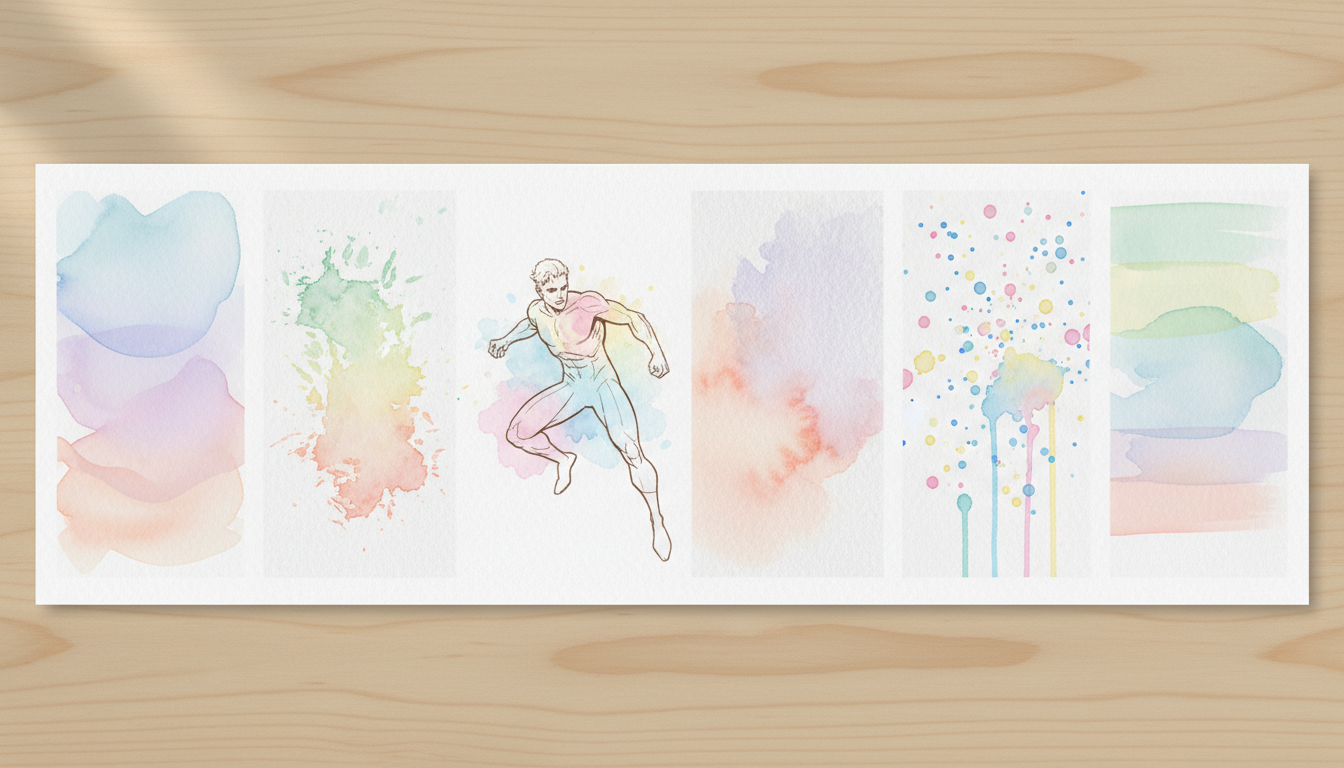
Understanding the visual characteristics of watercolor helps you appreciate the style and create better results with AI:
Soft Color Washes
The foundation of watercolor art is the wash — a thin, even layer of diluted pigment spread across the paper. In watercolor comics, washes create backgrounds, skies, and atmospheric effects. They range from barely-there tints to rich, saturated pools of color. Multiple layers of overlapping washes create depth and complexity.
Wet-on-Wet Blending
When new color is applied to paper that's still wet, the pigments flow into each other, creating soft gradients and organic color transitions. This technique produces the dreamy, fluid quality that defines watercolor art. In watercolor comics, wet-on-wet effects appear in skies, water, atmospheric haze, and emotional moments.
Dry Brush Texture
The opposite of wet-on-wet: a relatively dry brush dragged across textured paper creates broken, scratchy marks that reveal the paper's grain. This technique adds roughness, detail, and visual interest. In comics, dry brush effects work well for hair, bark, fabric texture, and gritty environments.
Paper Texture
The surface of watercolor paper — whether cold-pressed (textured) or hot-pressed (smooth) — is an active participant in the artwork. The grain catches pigment in its peaks, creating the characteristic speckled texture visible in watercolor paintings. AI watercolor generation faithfully reproduces this paper texture, adding to the authenticity of the result.
Ink Line and Wash
Many watercolor comics combine loose watercolor washes with pen or ink line work. The lines provide structure and definition — character outlines, panel borders, facial expressions — while the watercolor provides color, atmosphere, and emotion. This "line and wash" technique is one of the most popular and effective approaches for watercolor comics.
Creating Watercolor Comics with AI
iCartoon's Watercolor style captures the essential characteristics of the medium — translucent washes, soft edges, paper texture, and organic color blending. Here's how to create watercolor comics:
From Stories to Watercolor Comics
Use the AI Comic Creator with the Watercolor style selected. Write your story with descriptions that play to the medium's strengths: natural settings, emotional moments, atmospheric scenes, and gentle narratives. The AI generates multi-page comics where every panel looks like a hand-painted watercolor illustration.
From Photos to Watercolor Art
Transform your photos into watercolor paintings. This works spectacularly well for landscapes, portraits, flowers, food, and architecture. The AI reinterprets your photo through the watercolor lens — adding paper texture, soft edges, and translucent color layers that make every image look like a framed painting.
Create Watercolor Comics with AI
Transform your stories and photos into beautiful watercolor art. Soft, painterly, and personal.
Try Watercolor Style Free →Perfect Use Cases for Watercolor Comics
Watercolor isn't the right style for every story — but for certain types of content, it's unmatched:
Love Stories and Romance
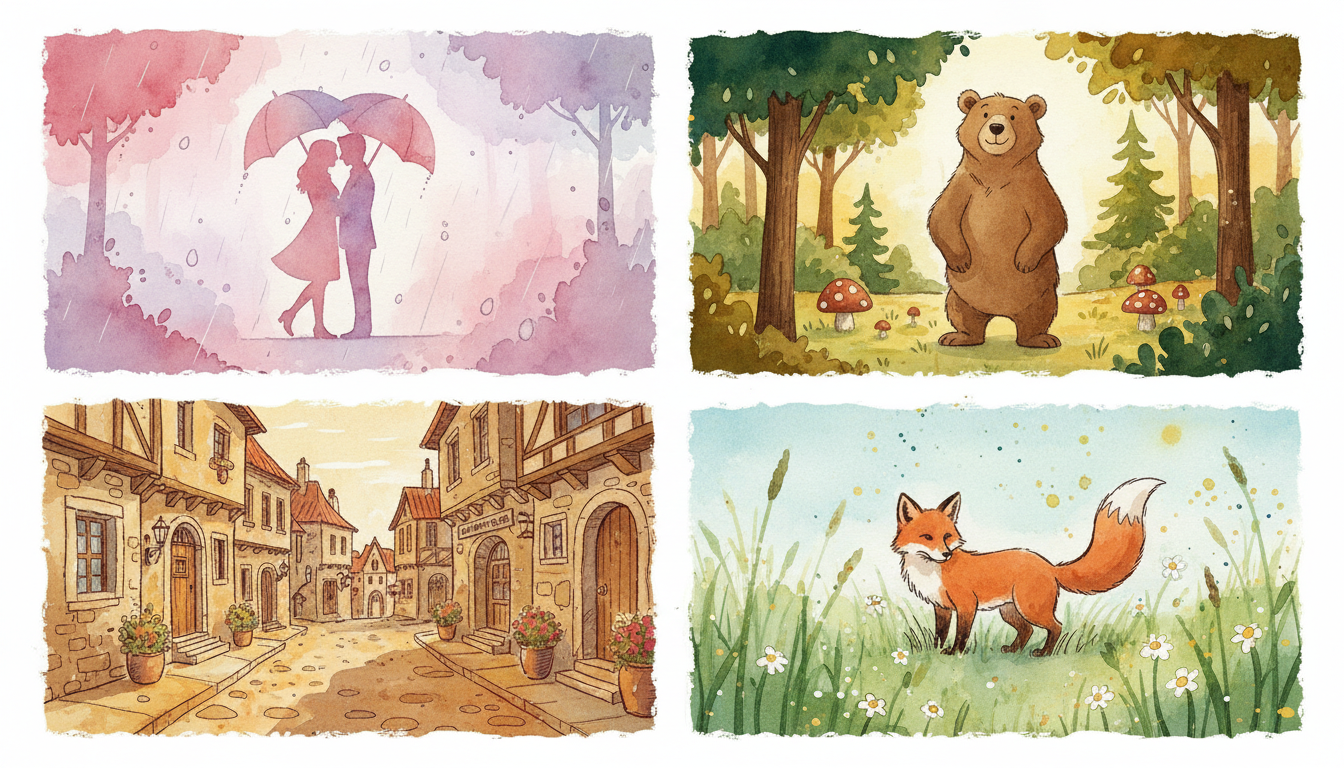
Watercolor's softness and emotional depth make it the ideal style for romantic narratives. First meetings, tender moments, longing glances, sunset walks — the medium's translucency and warmth amplify romantic emotion in a way that bold comic styles can't replicate. Watercolor romance comics feel intimate and genuine.
Children's Books and Family Stories
If you're creating a comic for young readers or a family story, watercolor is almost always the right choice. The style's warmth, accessibility, and softness create a visual world that feels safe and inviting. Bedtime stories, adventure tales, animal stories, and educational comics all shine in watercolor.
Travel Journals and Memoirs
Turn your travel photos and memories into watercolor comic journals. Each page becomes a painted memory — the cafe in Paris, the sunset in Santorini, the market in Marrakech. Watercolor's association with travel sketching makes it the most natural style for visual travel narratives.
Personalized Gifts
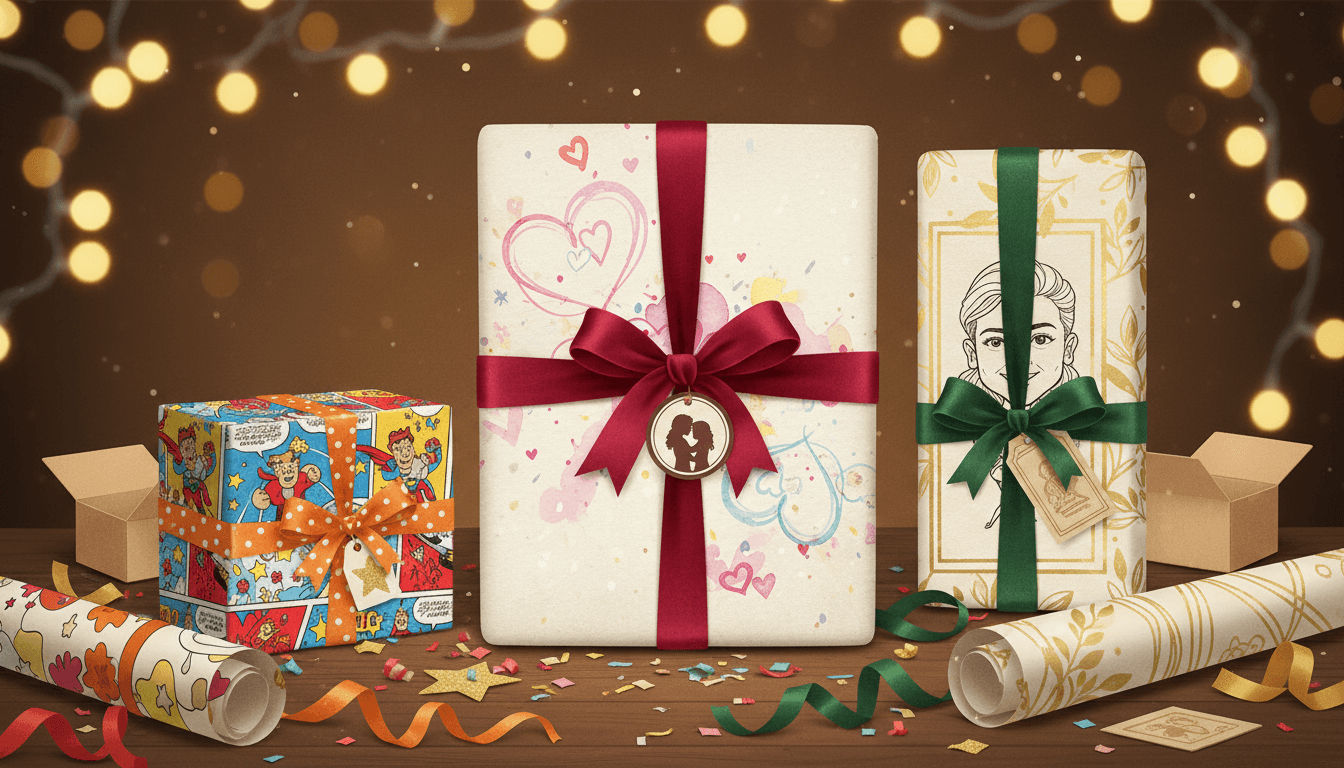
A watercolor comic created from personal photos makes an extraordinary gift. Anniversary stories, birthday tributes, "our story" narratives, and family portraits all become keepsake-worthy when rendered in watercolor. The style elevates personal content from casual to art-print quality. See our guide on personalized comic book gifts for more ideas.
Nature and Environmental Stories
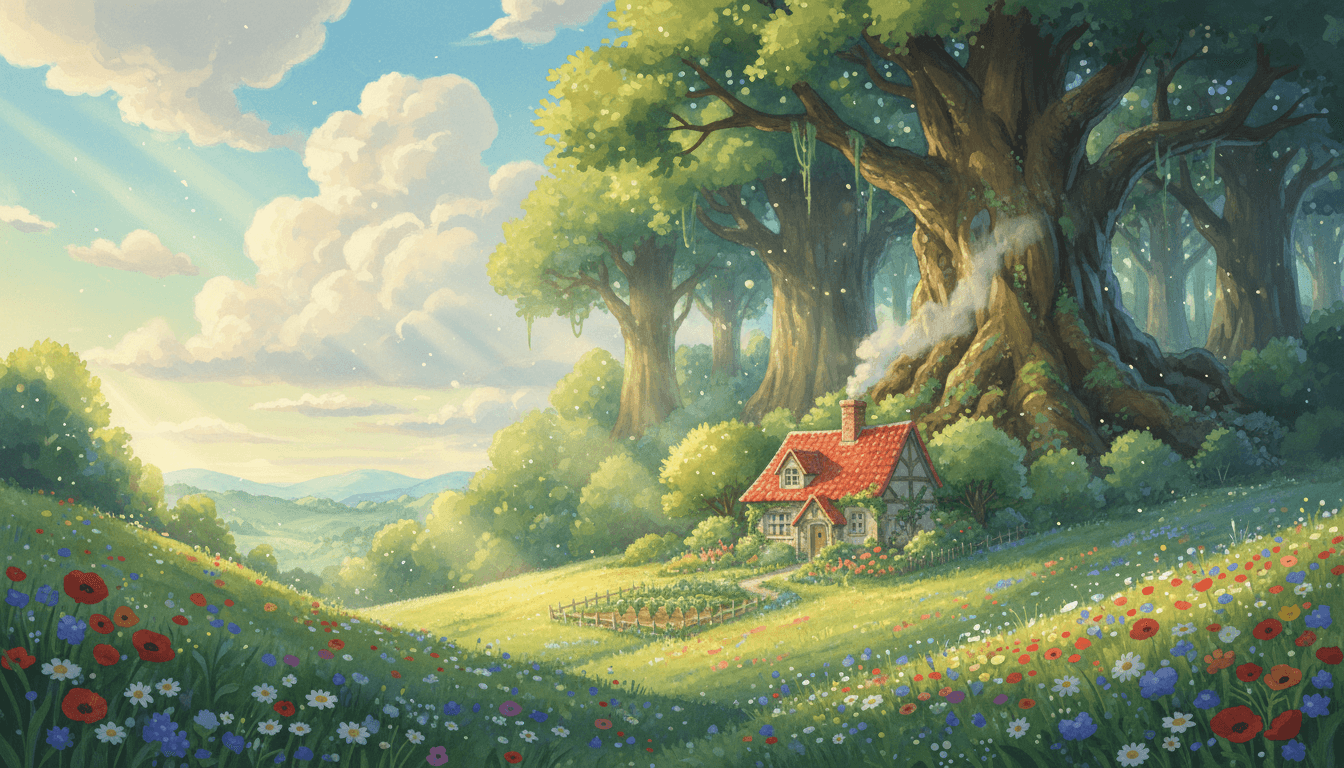
Watercolor and nature are inseparable. Stories about forests, oceans, wildlife, gardens, seasons, and environmental themes benefit enormously from the medium's organic quality. The way watercolor captures light through leaves, the movement of water, and the textures of earth and sky feels authentic in a way that digital art styles sometimes don't.
Watercolor vs Similar Painterly Styles
iCartoon offers several painterly art styles. Here's how watercolor compares to its closest siblings:
- Watercolor vs Studio Ghibli — Both are soft and painterly, but Ghibli has a specific anime-influenced character design and a magical realism quality. Watercolor is more varied and can range from realistic to loose and abstract. Ghibli always feels like animation; watercolor feels like fine art illustration.
- Watercolor vs Oil Painting — Oil painting produces rich, opaque colors with visible impasto texture — thick, textured brushstrokes on canvas. Watercolor is translucent and delicate where oil painting is dense and bold. Oil painting feels dramatic and classical; watercolor feels intimate and luminous.
- Watercolor vs Storybook — The storybook style draws from multiple illustration traditions including watercolor, gouache, and colored pencil. It tends toward a more structured, colorful approach optimized for narrative clarity. Pure watercolor is more fluid and atmospheric. Storybook feels like a published picture book; watercolor feels like an artist's studio.
- Watercolor vs Ink Drawing — Ink drawing is monochromatic and relies on line quality, cross-hatching, and contrast. Watercolor is chromatic and relies on color, tone, and atmosphere. They complement each other beautifully when combined — ink provides structure while watercolor provides emotion.
Tips for Beautiful Watercolor Comics
- Write atmospheric descriptions. Watercolor excels at capturing atmosphere — "morning mist over a quiet lake," "golden afternoon light through a kitchen window," "soft rain on cherry blossoms." Including atmospheric and lighting details in your story descriptions produces the most beautiful watercolor results.
- Embrace simplicity. Watercolor's strength is in what it suggests, not what it defines. Simple scenes — a couple on a bench, a child and a dog, a single flower on a table — often produce more powerful watercolor art than complex action scenes.
- Think about color mood. Warm tones (amber, rose, golden) create cozy, romantic feelings. Cool tones (blue, lavender, silver) create contemplative, peaceful moods. Mention colors and mood in your descriptions to guide the AI toward the emotional palette you want.
- Consider the paper space. Great watercolor art leaves some areas of white paper visible — the paper is part of the composition. Don't over-describe every detail of a scene. Leaving space allows the watercolor aesthetic to breathe.
- Pair with gentle stories. Watercolor's softness matches gentle narratives. While you can create any genre in watercolor, the style reaches its full potential with stories that prioritize emotion, beauty, and human connection over intensity and action.
Frequently Asked Questions
Is watercolor only good for children's books?
Not at all. While watercolor is popular in children's illustration, it's equally effective for adult romance, travel journals, memoirs, nature stories, and literary graphic novels. Many acclaimed graphic novels for adults use watercolor or watercolor-inspired techniques. The style communicates maturity and artistic sophistication.
Can I create watercolor comics from my photos?
Yes. iCartoon's photo-to-comic conversion works beautifully with the watercolor style. Landscapes, portraits, food, architecture, and nature photos all transform into stunning watercolor illustrations. The AI adds paper texture, translucent washes, and soft blending to create authentic watercolor art.
What subjects look best in watercolor?
Nature scenes, portraits, food, flowers, architecture, water, and skies are watercolor's sweet spots. Any subject with interesting lighting, color, or atmospheric quality will produce excellent results. Intimate scenes with emotional content tend to shine in the medium.
Can I print watercolor comics?
Absolutely. Watercolor comics print beautifully — the style actually looks even better in print than on screen because the paper texture resonates with physical paper. Printed watercolor comics make excellent gifts, art prints, and keepsakes.
How does AI watercolor compare to real watercolor painting?
AI watercolor generation produces results that closely replicate the look of real watercolor — translucent washes, soft edges, paper texture, and organic color blending. While a trained eye might notice differences, the overall aesthetic quality and emotional impact are comparable to hand-painted watercolor illustration.
Watercolor comic art occupies a beautiful space between fine art and visual storytelling. It's the style that makes every story feel like a keepsake, every scene feel like a painting, and every character feel like they were brought to life with a brush and a palette of soft colors. Whether you're creating a love story, a children's book, a travel memoir, or a gift for someone special — watercolor brings a warmth and beauty that no other comic style can match. Start painting your story and discover why watercolor has captivated artists and audiences for centuries.