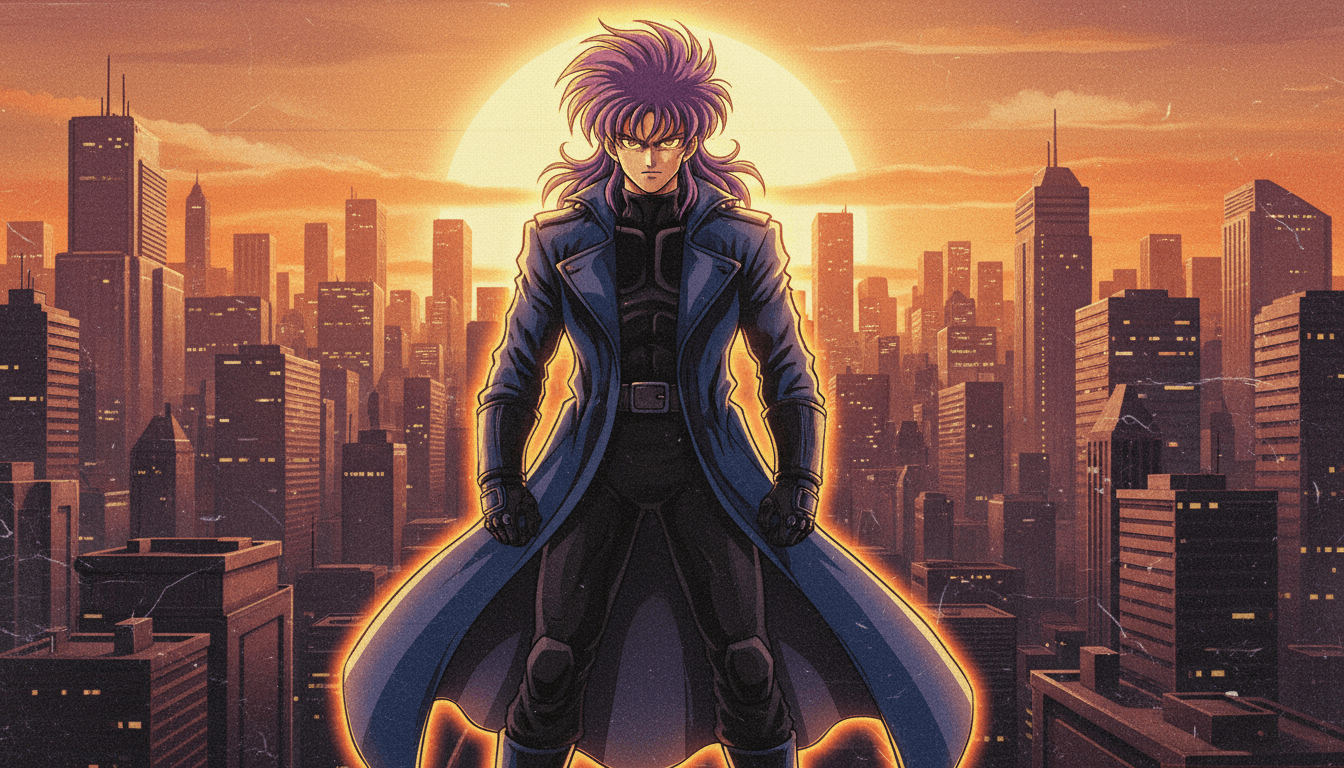
There's a visual quality to 80s and 90s anime that modern animation — for all its technical perfection — simply cannot replicate. The slightly imperfect cel-shading, the hand-painted backgrounds with visible brushstrokes, the warm film grain, the muted neon glow, the analog softness that comes from physical media rather than digital precision. This is the aesthetic of anime's golden age — the era that gave us Akira, Ghost in the Shell, Cowboy Bebop, Sailor Moon, Dragon Ball Z, Neon Genesis Evangelion, and dozens of other works that defined not just anime, but visual culture itself.
The retro anime aesthetic has exploded in popularity in recent years, driven by a generation of creators and consumers who either grew up with these shows or discovered them through streaming and social media. There's an entire aesthetic movement — often tagged as vaporwave, city pop, or retrowave — that draws heavily from the visual language of 80s and 90s anime. And now, with AI art generation, anyone can create authentic retro anime art and comics without needing to master the painstaking techniques of traditional cel animation.
The Golden Age of Anime: 1980-1999
To understand retro anime's visual DNA, you need to understand the era that created it. The 80s and 90s were a period of extraordinary creative ambition in Japanese animation, driven by economic boom (particularly during Japan's bubble economy of the late 80s), rapidly evolving technology, and fierce competition between studios.
The 1980s: Ambition and Experimentation
The 80s saw anime push into new territory with unprecedented production budgets. Katsuhiro Otomo's Akira (1988) — with its 160,000 hand-drawn cels and groundbreaking animation techniques — set a visual standard that influenced every animated film that followed. Mamoru Oshii's early work, Hayao Miyazaki's Nausicaa and Castle in the Sky, and the original Mobile Suit Gundam films established anime as a serious artistic medium capable of telling complex, adult stories.
Visually, 80s anime is characterized by detailed mechanical designs, realistic proportions (compared to more exaggerated later styles), moody lighting, and a willingness to let scenes breathe with quiet atmospheric moments.
The 1990s: Peak Expression
The 90s represented the pinnacle of hand-drawn anime production. Ghost in the Shell (1995) combined traditional animation with early CGI to create a cyberpunk vision that directly inspired The Matrix. Neon Genesis Evangelion (1995) revolutionized storytelling in anime with its psychological depth and experimental visual techniques. Cowboy Bebop (1998) blended jazz, noir, and sci-fi into a visual style that remains influential. Sailor Moon defined the magical girl genre with its distinctive character designs and transformation sequences.
By the late 90s, the transition to digital production began. The last purely hand-drawn anime productions carry a warmth and texture that digital animation has struggled to recapture — which is precisely why the retro anime aesthetic is so coveted today.
Visual DNA: What Makes Retro Anime Look Retro
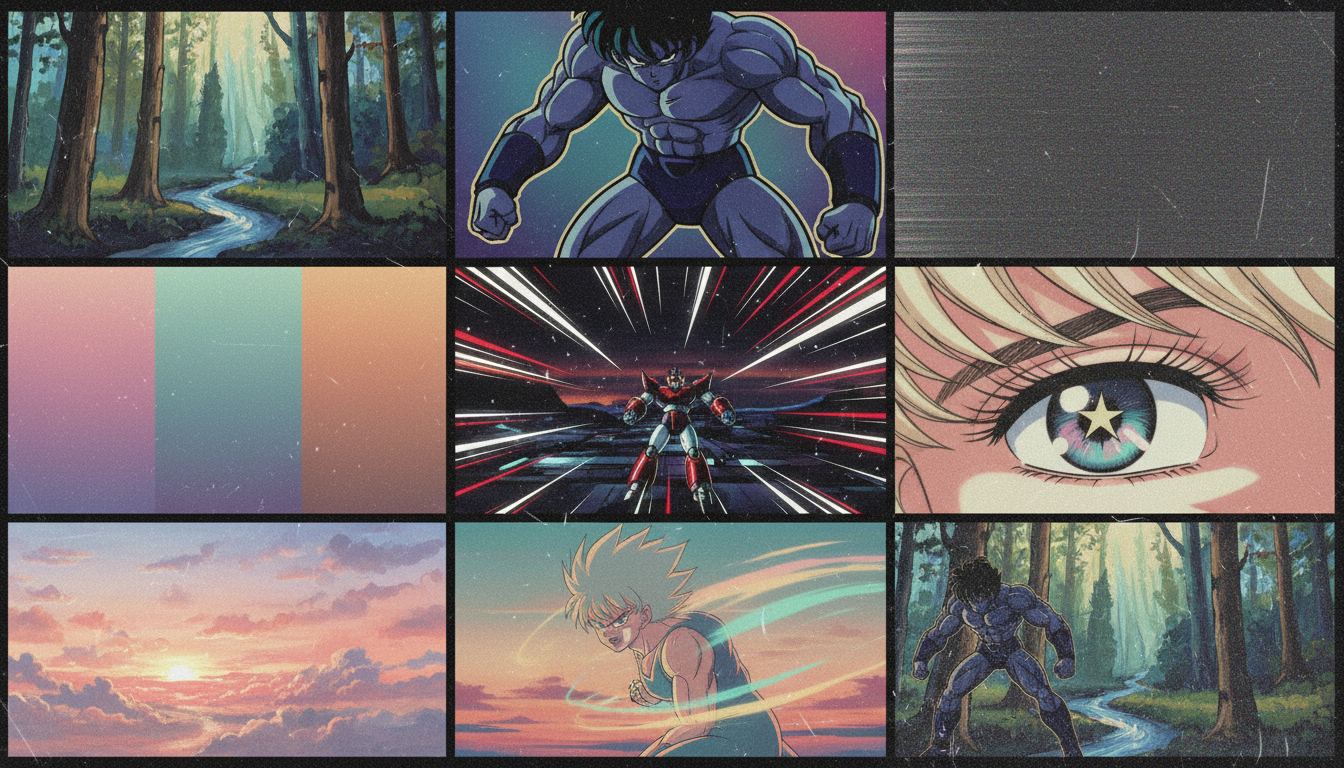
The retro anime aesthetic is defined by specific visual characteristics, most of which are actually artifacts of the analog production process used during the era:
Film Grain and Analog Texture
80s and 90s anime was shot on film, which introduces a natural grain — tiny variations in brightness and color that create a subtle, organic texture across every frame. This grain is absent in modern digital animation, which is why retro anime feels "warmer" and more tactile. Film grain also adds a sense of age and history — the visual equivalent of vinyl record crackle.
Cel-Shading and Paint Edges
Traditional anime was painted on transparent cellulose sheets (cels) layered over painted backgrounds. This process produced characteristic visual artifacts: slightly imperfect color fills, visible paint edges where colors meet, and subtle color variations from one cel to the next. These "imperfections" are part of the aesthetic's charm — they remind the viewer that a human hand created every frame.
Hand-Painted Backgrounds
While character cels were painted with flat colors, backgrounds were painted with traditional art techniques — gouache, watercolor, and airbrush on illustration board. This created a beautiful contrast: relatively flat characters moving against richly textured, atmospheric environments. The hand-painted backgrounds of anime studios like Studio Ghibli, Sunrise, and Madhouse are considered masterworks of illustration.
Muted Neon Color Palette
The color palette of retro anime is distinctive: neon pinks, teals, and purples — but slightly muted by film stock and analog color processing. It's not the sharp, saturated digital neon of modern art — it's a softer, warmer glow that feels like neon lights seen through a haze. This "muted neon" quality is one of the most recognizable aspects of the retro anime aesthetic.
VHS and Broadcast Artifacts
Most fans first experienced 80s and 90s anime through VHS tapes or television broadcasts, both of which added their own visual artifacts — scan lines, color bleeding, slight blur, and tracking interference. These artifacts, originally considered flaws, have become part of the aesthetic. Adding VHS-style effects to modern art instantly codes it as "retro anime."
Dramatic Lighting and Shadow
Retro anime used dramatic lighting techniques that modern anime's even, digital lighting rarely replicates. Hard shadows, rim lighting, dramatic key lighting, and chiaroscuro effects created moody, cinematic compositions. Characters might be half-lit by a neon sign, backlit by an explosion, or illuminated only by moonlight — each lighting choice serving the narrative mood.
Iconic Influences and Their Visual Signatures
Different retro anime properties established distinct visual sub-styles that continue to influence art today:
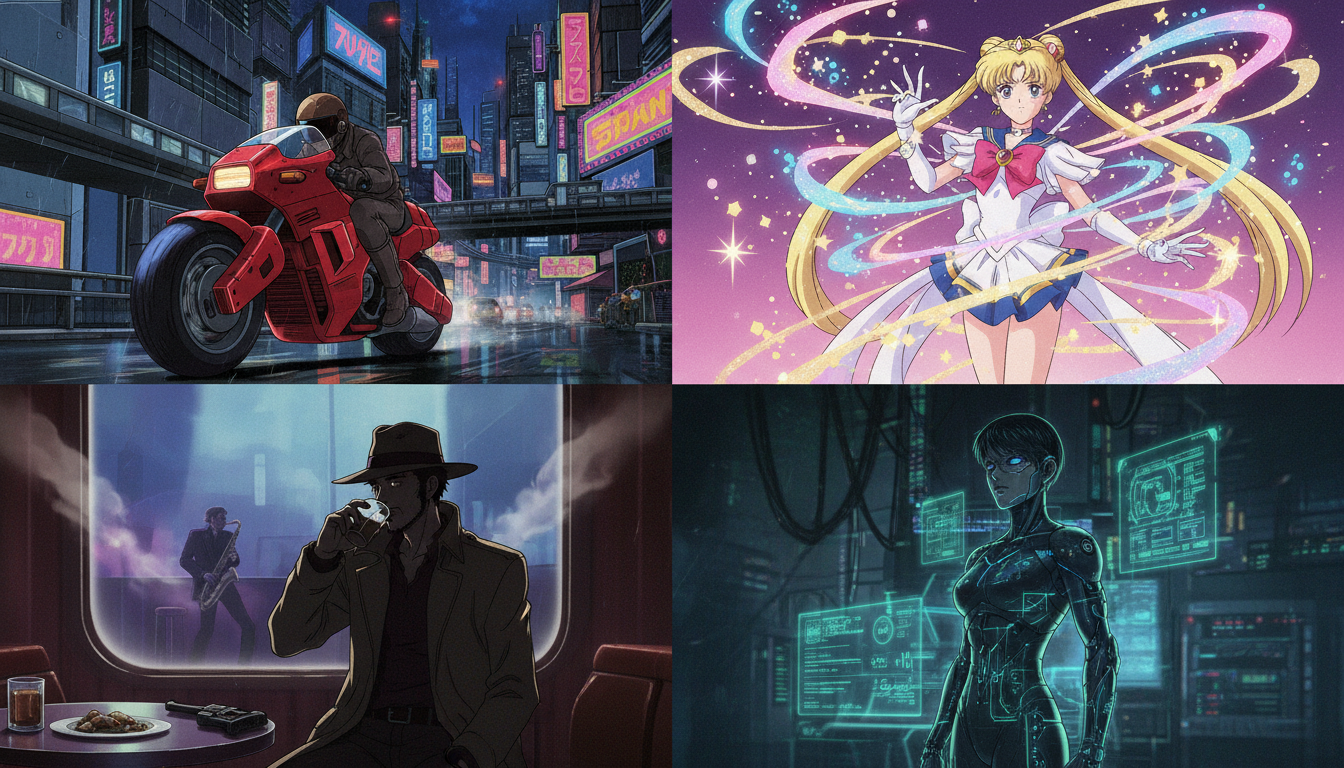
- Akira (1988) — Ultra-detailed mechanical design, visceral action, Neo-Tokyo nightscapes with neon reflections on wet streets, red-dominant color palette. The gold standard for cyberpunk anime visuals.
- Ghost in the Shell (1995) — Philosophical minimalism mixed with technological detail, cool blue-green color palette, reflective surfaces, urban decay alongside high technology. Defined the aesthetic of "thinking person's sci-fi."
- Cowboy Bebop (1998) — Jazz-influenced color choices, widescreen cinematic composition, warm amber and cool blue contrast, eclectic mix of noir, western, and space opera visual conventions. Style as narrative.
- Sailor Moon (1992) — Sparkling transformation sequences, soft pastel color palette with sudden bold accents, elaborate costume design, romantic backgrounds dissolving into abstract stars and roses. Defined magical girl aesthetics.
- Neon Genesis Evangelion (1995) — Stark visual contrasts, orange and blue color coding, dramatic cross-shaped explosions, psychological imagery, deliberate use of still frames and silence for tension.
- Dragon Ball Z (1989) — High-energy action, dramatic power-up auras, speed lines filling the frame, extreme facial expressions, landscape-destroying combat. The visual template for battle anime.
Creating Retro Anime Art with AI
iCartoon's Retro Anime style is designed to capture the authentic look and feel of 80s and 90s anime — from the cel-shading and film grain to the muted neon palette and hand-painted quality.
From Stories to Retro Anime Comics
Use the AI Comic Creator with the Retro Anime style selected. Write stories that match the era's themes: cyberpunk adventures, space bounty hunters, supernatural mysteries, mecha battles, or coming-of-age dramas. The AI generates comic pages with the authentic retro aesthetic — film grain, cel-shading, dramatic lighting, and that unmistakable warm analog quality.
For the most authentic results, incorporate visual details that resonate with the era: neon-lit cityscapes, analog technology (CRT monitors, cassette tapes, payphones), dramatic sunsets, rain-slicked streets, and moody interior lighting.
From Photos to Retro Anime Portraits
Transform your photos into retro anime characters. The AI converts modern digital photos into the hand-painted cel look of the golden age — complete with the slightly imperfect paint edges, dramatic shading, and warm color processing that define the style. Your selfie becomes a character who could have stepped out of a 1995 anime feature.
Create Retro Anime Art with AI
Channel the golden age of anime. Film grain, cel-shading, and hand-painted beauty — all from a text prompt.
Try Retro Anime Style Free →Retro Anime vs Modern Anime vs Manga
These three related styles serve different creative purposes:
- Retro Anime — Hand-painted cel look, film grain, muted neon palette, dramatic lighting, analog warmth. Evokes the 1980s-90s golden age. Best for atmospheric, mood-driven stories with cinematic quality. Nostalgic, warm, and textured.
- Modern Anime — Clean digital lines, sharp colors, smooth gradients, even lighting, high detail. Evokes contemporary anime production (2010s-present). Best for bright, polished stories with complex character designs. Clean, precise, and vibrant.
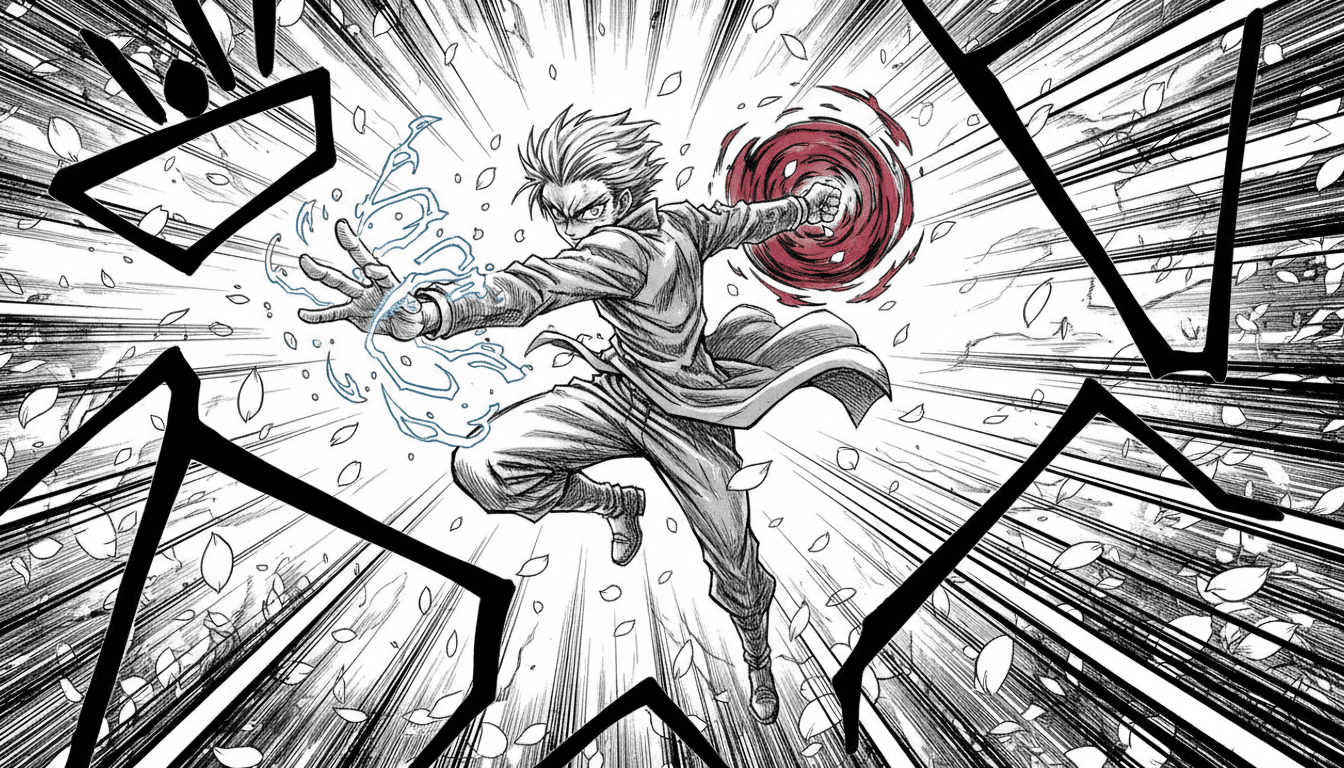
- Manga — Black and white (primarily), screentone shading, speed lines, expressive eyes, dynamic panel layouts. The comic book form rather than the animation aesthetic. Best for serialized storytelling with emphasis on pacing and visual rhythm.
Each style has its strengths. Retro anime offers atmosphere and emotion that modern styles often sacrifice for clarity. Modern anime provides detail and polish. Manga provides the most comic-native storytelling experience. Choose based on what mood and experience you want your reader to have.
Style Combinations: Retro Anime Mashups
Retro anime plays beautifully with other aesthetics. Some of the most visually striking AI art comes from combining retro anime with complementary styles:
Cyberpunk + Retro Anime
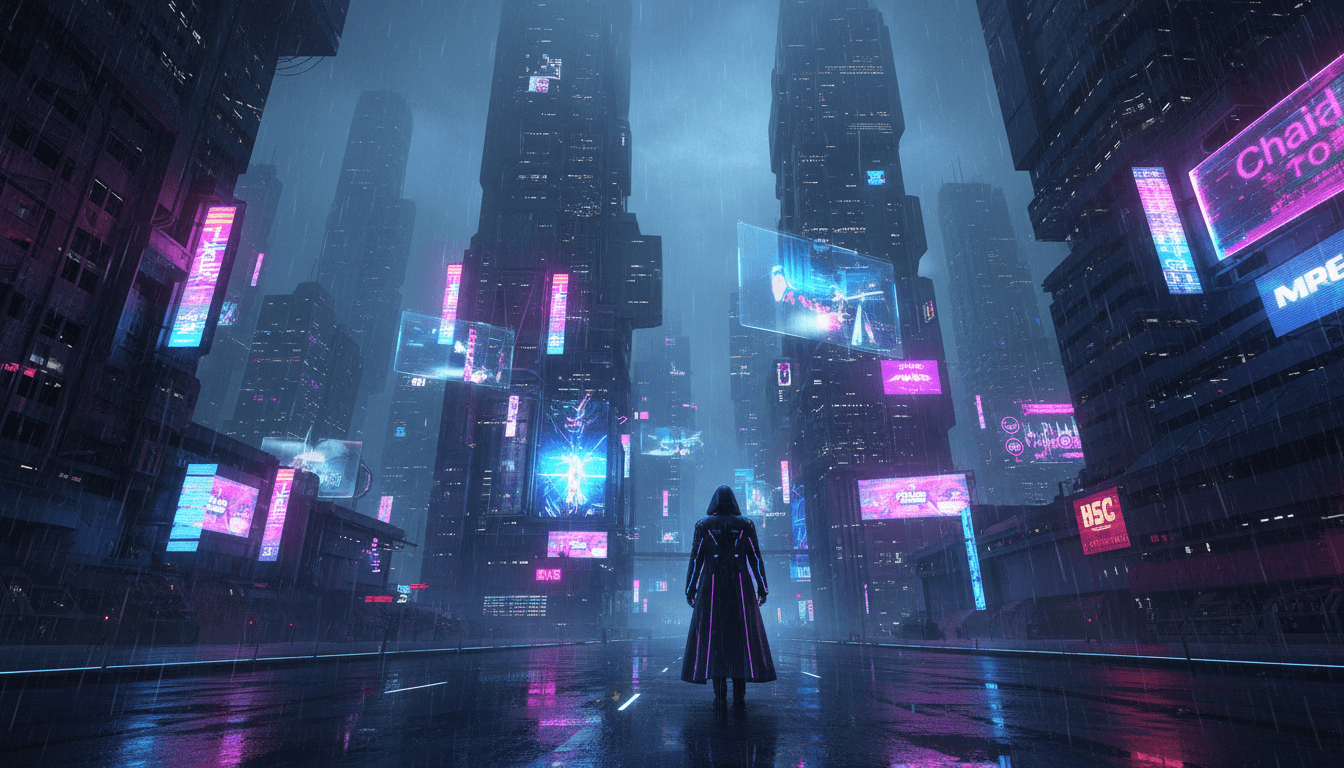
This is the most natural combination — and the most popular. The retro anime aesthetic was born alongside cyberpunk fiction, and the two are deeply intertwined. Cyberpunk themes (neon cities, rogue hackers, corporate dystopia, androids) rendered in retro anime style produce art that captures the spirit of Akira, Ghost in the Shell, and Blade Runner simultaneously.
Vaporwave + Retro Anime
The vaporwave aesthetic — with its pastel gradients, classical busts, palm trees, and nostalgic early-internet imagery — shares DNA with retro anime. Combining the two creates a dreamy, surreal visual experience: anime characters in vaporwave environments, bathed in purple and pink light, surrounded by Roman columns and VHS static.
City Pop + Retro Anime
Japanese city pop music of the 80s had album art that's become iconic in its own right — stylish women in sunglasses, Tokyo skylines at sunset, sports cars on coastal highways. This aesthetic maps perfectly onto retro anime, creating a specific 1980s Japanese visual mood: sophisticated, glamorous, and effortlessly cool.
Tips for Authentic Retro Anime Results
- Specify the era. Mentioning "1980s anime" or "1990s anime" in your descriptions helps the AI target the right sub-era. 80s anime tends toward more detailed mechanical design and darker themes. 90s anime is broader, ranging from Evangelion's psychological intensity to Sailor Moon's sparkly optimism.
- Include lighting details. Retro anime's dramatic lighting is one of its most defining features. Describe neon signs, sunset backlighting, moonlight through windows, or harsh fluorescent tubes. The AI translates these lighting cues into the dramatic shadow work that defines the style.
- Reference analog media. Including objects like VHS tapes, CRT televisions, rotary phones, cassette players, or film cameras in your descriptions reinforces the retro time period and adds authentic detail.
- Think cinematically. Retro anime drew heavily from cinema — Ridley Scott, Stanley Kubrick, Wong Kar-wai. Describe your scenes with cinematic language: "wide establishing shot," "dramatic low-angle close-up," "silhouette against the city lights." This produces more dynamic, film-like compositions.
- Lean into mood. Retro anime is fundamentally about mood and atmosphere. The best results come from descriptions that emphasize how a scene feels rather than just what it contains. "A lonely figure watching rain streak down a neon-lit window" conveys mood that the AI transforms into authentic retro anime atmosphere.
Frequently Asked Questions
What's the difference between retro anime and regular anime style?
Retro anime specifically captures the look of 1980s-90s hand-drawn, cel-animated anime — with film grain, hand-painted backgrounds, slightly imperfect cel-shading, and muted neon colors. Regular (modern) anime reflects contemporary digital production — cleaner lines, sharper colors, smoother shading, and higher detail. The key difference is analog warmth vs digital precision.
Can I create retro anime from my photos?
Yes. iCartoon's photo-to-comic feature converts any photo into retro anime style. Your selfie becomes a 90s anime character, your cityscape becomes a Neo-Tokyo backdrop, and your everyday scene gains the warm, grainy quality of classic anime.
What stories work best in retro anime style?
Cyberpunk and sci-fi are natural fits given the era's output. But retro anime also works beautifully for slice-of-life stories (the warm aesthetic adds nostalgia), romance (dramatic lighting and emotional depth), action (dynamic compositions and energy), and mystery/noir (moody shadows and atmospheric tension).
Is retro anime the same as vaporwave?
No, but they're related. Vaporwave is a broader aesthetic movement that draws from multiple sources including retro anime, 80s consumer culture, early internet imagery, and classical art. Retro anime is specifically the visual style of 80s-90s Japanese animation. Vaporwave borrows from retro anime but includes many non-anime elements.
Can I mix retro anime with other art styles?
Retro anime combines well with cyberpunk, vaporwave, noir, and city pop aesthetics. Each combination produces a different mood: cyberpunk adds edge and technology, vaporwave adds surreal dreaminess, noir adds mystery and shadow, and city pop adds glamour and sophistication.
The retro anime aesthetic carries the weight of an extraordinary creative era — a time when hand-drawn animation reached heights of artistry and ambition that still inspire creators worldwide. With AI tools, you can channel that golden age energy into your own stories, creating comics and art that capture the warmth, drama, and beauty of anime's finest era. Step back in time and discover why the 80s and 90s produced the most visually powerful anime the world has ever seen.