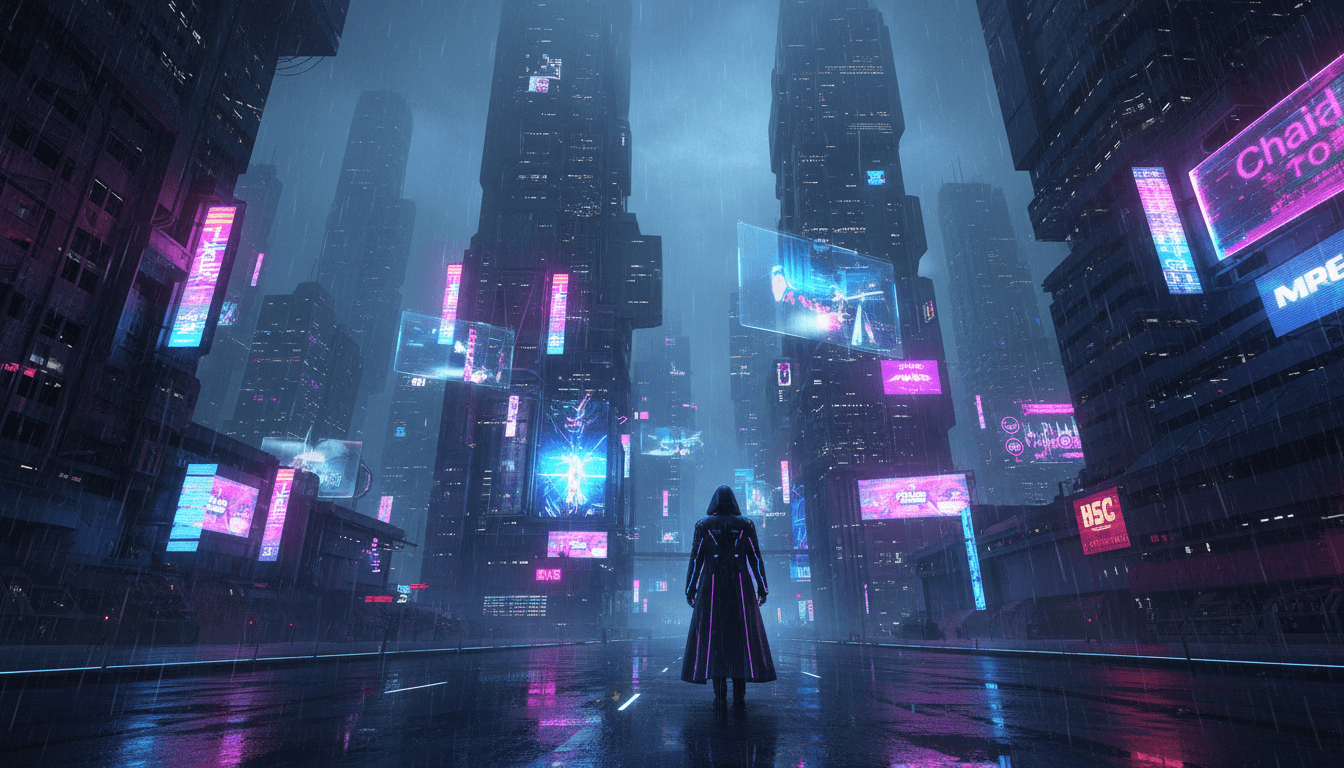
Rain streams down the side of a towering megastructure. Neon signs in Japanese and Mandarin cast electric blue and hot pink reflections across rain-slicked streets. A figure in a leather jacket with cybernetic arm augmentations ducks into an alley, the glow of holographic advertisements illuminating the steam rising from a street vendor's cart. This is cyberpunk — and it's one of the most visually striking art styles you can create with AI.
The cyberpunk aesthetic has captivated audiences since the 1980s, from Ridley Scott's Blade Runner to Netflix's Cyberpunk: Edgerunners. It's a visual language that combines futuristic technology with urban decay, neon beauty with gritty realism, and human vulnerability with mechanical augmentation. And now, AI makes it possible for anyone to create professional cyberpunk comic art — no dystopian art school required.
What Defines Cyberpunk Aesthetics
Cyberpunk isn't just "sci-fi with neon." It's a distinct aesthetic philosophy with specific visual elements, themes, and moods. Understanding these elements helps you create more authentic and impactful cyberpunk art.
The Neon Palette
Cyberpunk's signature look is built on a dark base with neon highlights. The primary palette includes deep blacks, dark blues, and charcoal grays — punctuated by intense neon accents in electric blue, hot pink/magenta, acid green, amber orange, and purple. These neon colors don't just decorate the scene — they light it. In cyberpunk worlds, neon signs, holographic displays, and LED strips are the primary light sources, casting colorful reflections across every wet surface.
Rain and Reflections
It always rains in cyberpunk cities. Not just for mood (though it creates incredible atmosphere), but because rain serves a crucial visual function: wet streets and surfaces become mirrors that multiply the neon light, filling the frame with color. Every puddle reflects a sign. Every window streaks with colored light. Rain transforms a dark city into a luminous canvas of reflected neon — it's the secret ingredient of the cyberpunk visual formula.
Towering Urban Architecture
Cyberpunk cities are vertical. Massive megastructures stretch impossibly high, connected by sky bridges, elevated highways, and transit tubes. At street level, the towers create deep, shadow-filled canyons where sunlight never reaches. The architecture combines ultra-modern glass and steel towers with older, decaying lower levels — a visual representation of the class divide that's central to cyberpunk themes.
Cybernetic Augmentation
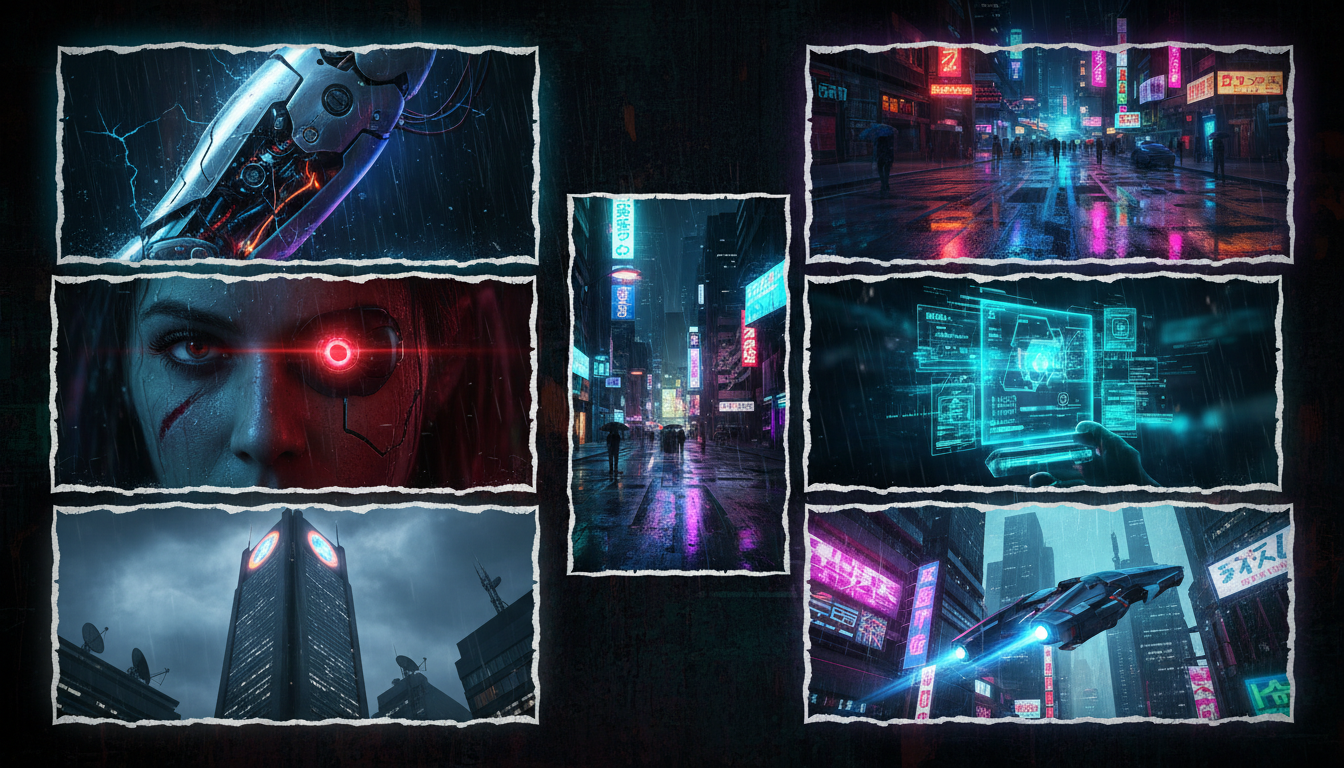
Characters in cyberpunk worlds blend human flesh with machine parts. Robotic arms, cybernetic eyes that glow in the dark, neural interface ports, and visible circuitry under skin are all staple visual elements. These augmentations are both functional and aesthetic — they tell you something about the character's wealth, profession, and relationship with technology.
High Tech, Low Life
This is the core theme of cyberpunk, expressed visually everywhere. Holographic billboards advertise luxury products to people sleeping in cardboard boxes. A cutting-edge neon-lit corporation towers over a street market where people barter for basic necessities. The contrast between technological abundance and human poverty is what gives cyberpunk its emotional weight and visual tension.
Cyberpunk's Cultural Legacy
The cyberpunk visual language didn't emerge in a vacuum. It's the product of decades of creative evolution across multiple media:
Blade Runner (1982)
Ridley Scott's masterpiece established the cyberpunk visual template that everything since has referenced. The perpetually dark, rain-soaked Los Angeles of 2019 — with its towering Tyrell Corporation pyramid, neon-soaked streets, and flying cars threading through smog — became the definitive cyberpunk cityscape. Syd Mead's production design created a world that felt simultaneously futuristic and ancient, clean and decayed.
Ghost in the Shell (1995)
Mamoru Oshii's anime masterpiece brought cyberpunk aesthetics into the Japanese animation tradition. Its vision of New Port City — dense, multilayered, crawling with technology — merged cyberpunk with anime's visual strengths: fluid action, philosophical depth, and emotional character design. The film's influence on subsequent cyberpunk art (including The Matrix) is immeasurable.
Cyberpunk 2077 and Edgerunners
CD Projekt Red's massive open-world game and Netflix's anime adaptation brought cyberpunk aesthetics to a new generation. Night City is the most detailed cyberpunk environment ever created — every block packed with visual storytelling, every neon sign contributing to the world-building. The Edgerunners anime, created by Studio Trigger, combined cyberpunk visuals with kinetic anime action, creating one of the most visually stunning TV series in recent memory.
Comics and Manga
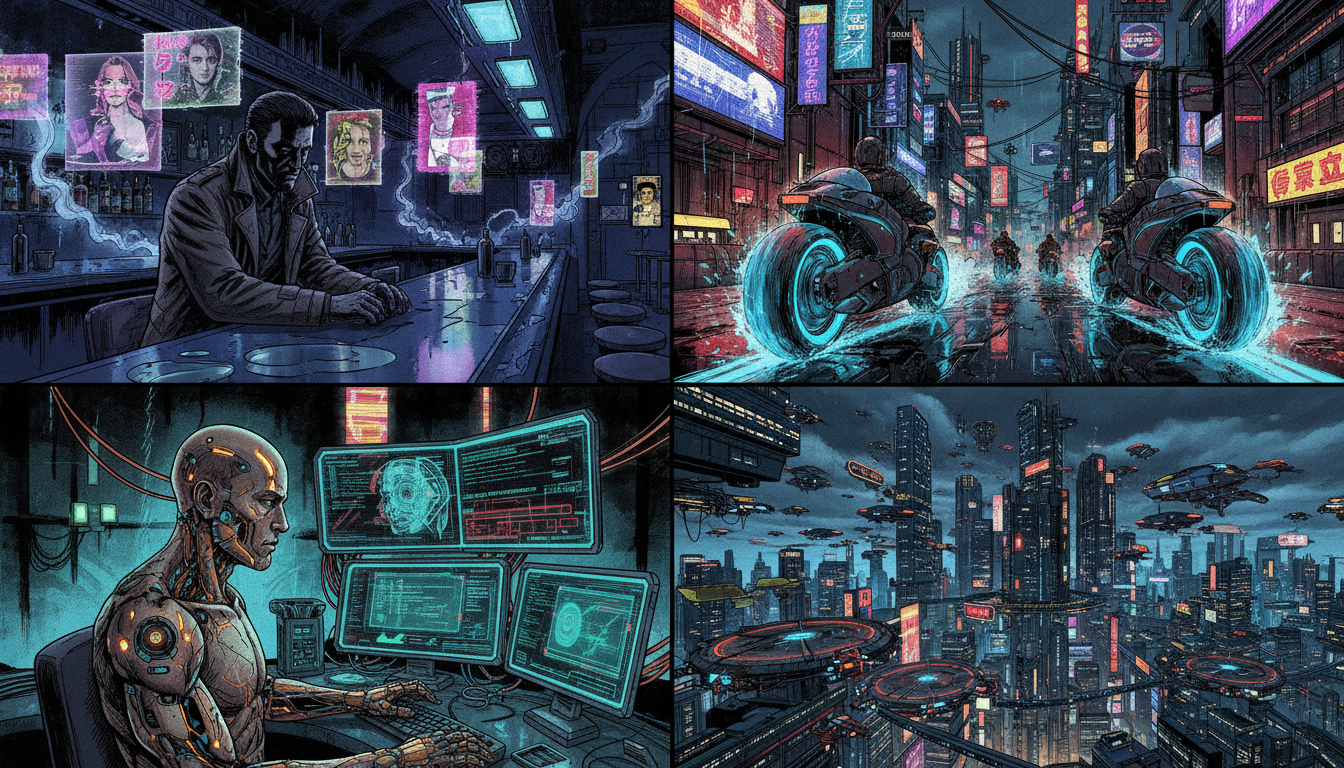
Cyberpunk has deep roots in comics. Judge Dredd's Mega-City One, Akira's Neo-Tokyo, Transmetropolitan's dystopian city, and Warren Ellis's various cyberpunk works all contributed to the visual language. Katsuhiro Otomo's Akira in particular — with its detailed cityscapes, motorcycle chases, and government conspiracies — established cyberpunk as a legitimate comic/manga genre.
Creating Cyberpunk Comics with AI
iCartoon's cyberpunk art style captures the essential visual elements: neon lighting, rain-soaked urban environments, futuristic technology, and atmospheric depth. Here's how to get the most out of it:
Writing Cyberpunk Scene Descriptions
The key to great AI cyberpunk art is vivid, atmospheric descriptions. Include these elements in your prompts:
- Lighting sources. Specify neon signs, holographic displays, LED strips, and their colors. "Blue neon from a ramen shop sign illuminates the character's face" gives the AI concrete lighting direction.
- Weather and atmosphere. "Rain," "steam rising from vents," "fog rolling through the street," "haze of pollution" — atmospheric elements create depth and mood.
- Technology details. Mention specific tech: "holographic billboards," "flying drones overhead," "cybernetic arm with visible circuitry," "neural interface plugged into her temple."
- Scale and perspective. "Looking up at towering megastructures," "a narrow alley between massive buildings," "the city stretches endlessly below" — perspective cues create the signature cyberpunk vertigo.
Cyberpunk Character Design
When creating characters for cyberpunk stories, consider these visual conventions:
- Clothing: Leather jackets, tactical gear, neon-accented streetwear, long coats, visors, and goggles. Mix high-tech accessories with worn, lived-in clothing.
- Augmentations: Glowing cybernetic eyes, mechanical limbs, visible neural ports, subcutaneous LEDs, and tech tattoos. Augmentations show character history and social status.
- Posture and attitude: Cyberpunk characters are survivors. They lean against walls, crouch on rooftops, look over their shoulders. Their body language communicates wariness, confidence, or quiet defiance.
Photo-to-Cyberpunk Conversion
One of the most popular uses of cyberpunk style is transforming regular photos into cyberpunk art. Upload a portrait or cityscape to iCartoon's photo converter and select the cyberpunk style. City photos gain neon-soaked atmospheric effects. Portraits gain cybernetic enhancements and dramatic lighting. Even suburban scenes become dystopian landscapes.
Cyberpunk vs Neon Noir vs Steampunk
These three styles share some visual DNA but differ significantly in mood, setting, and themes. Understanding the distinctions helps you choose the right style:
Cyberpunk vs Neon Noir
Neon noir takes the neon lighting and dark atmosphere of cyberpunk but strips away the sci-fi elements. Think of it as cyberpunk's contemporary cousin. Neon noir features present-day or near-future settings with dramatic noir lighting enhanced by neon colors. It's more focused on crime, mystery, and psychological drama than futuristic technology. Use cyberpunk for sci-fi stories. Use neon noir for modern thrillers with atmospheric neon styling.
Cyberpunk vs Steampunk
Steampunk replaces cyberpunk's neon and chrome with brass, copper, and steam. Where cyberpunk looks forward to a digital dystopia, steampunk looks backward to an alternative Victorian industrial age. Both are "punk" genres — both imagine worlds where technology and society clash — but the visual language is entirely different. Steampunk is warm, mechanical, and ornate. Cyberpunk is cold, digital, and neon. Choose steampunk for adventure and invention stories. Choose cyberpunk for dystopia and resistance.
Cyberpunk vs Retro Anime
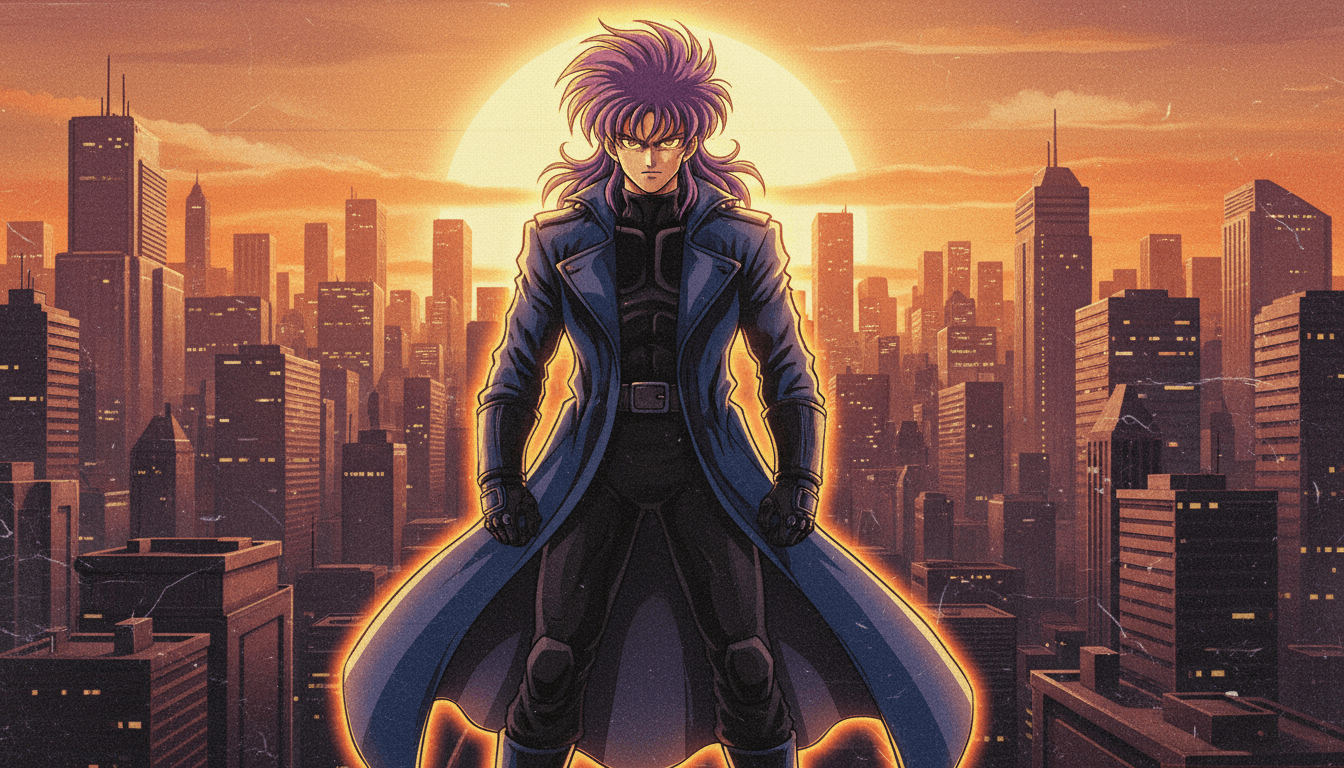
Retro anime shares some visual territory with cyberpunk thanks to 80s/90s anime like Akira, Ghost in the Shell, and Bubblegum Crisis. But retro anime is a broader style that includes all genres from that era — not just cyberpunk. If you want the specific look of 90s cyberpunk anime, retro anime might actually be a great complementary choice. For pure cyberpunk that's not specifically anime-styled, the dedicated cyberpunk style gives more atmospheric depth and neon intensity.
Enter the Cyberpunk World
Create neon-soaked cyberpunk comics and art with AI. Transform photos or build original dystopian stories.
Try Cyberpunk Style Free →World-Building in Cyberpunk Panels
The best cyberpunk comics create a sense of a larger world beyond the panels. Every background detail, every sign, every piece of technology contributes to world-building. Here are techniques for rich cyberpunk environments:
- Layer your cityscapes. Include foreground (street-level detail), midground (buildings and signage), and background (distant towers and sky). This depth creates immersion.
- Include readable signage. Neon signs advertising fictional products, company logos, and bilingual text (English mixed with Japanese, Chinese, or Korean characters) add authenticity to cyberpunk environments.
- Show social stratification. Mix luxury and poverty in the same panel. A gleaming corporate tower visible behind a makeshift street market tells a story without any dialogue.
- Add technological details. Drones, holographic displays, surveillance cameras, vending machines, and cable bundles running between buildings all contribute to the feeling of a technologically saturated world.
- Use lighting as storytelling. Different neon colors can represent different districts, moods, or narrative elements. A character moving from warm amber light into cold blue light signals a shift in tone or allegiance.
Cyberpunk Story Ideas for Comics
Need inspiration? Here are compelling cyberpunk narrative premises perfect for comic storytelling:
- The disconnected. In a world where everyone is always online, a character's neural implant fails — cutting them off from the digital world everyone else inhabits.
- Memory dealer. A black-market trader who buys and sells people's memories discovers a memory that could bring down a megacorporation.
- Last organic. The last person in the city who refuses cybernetic augmentation becomes the target of both corporate interests and underground resistance groups.
- Neon detective. A classic noir detective story set against cyberpunk backdrops — investigating crimes that blur the line between human and artificial.
- Underground. A community living in the literal underground of a megacity, building their own society away from corporate surveillance.
Frequently Asked Questions
What makes cyberpunk different from regular sci-fi?
Cyberpunk specifically focuses on the intersection of advanced technology and social inequality. While general sci-fi can be optimistic (Star Trek) or neutral, cyberpunk is inherently critical — it examines how technology concentrates power and what happens to people at the bottom of that power structure. Visually, cyberpunk is darker, more urban, and more neon-saturated than general sci-fi.
Can I convert real city photos into cyberpunk art?
Yes, and the results are often spectacular. City photos — especially nighttime shots or rainy urban scenes — transform dramatically with the cyberpunk style. The AI adds neon lighting, atmospheric effects, and futuristic details to create convincing cyberpunk cityscapes from ordinary urban photographs.
What's the best companion style for cyberpunk?
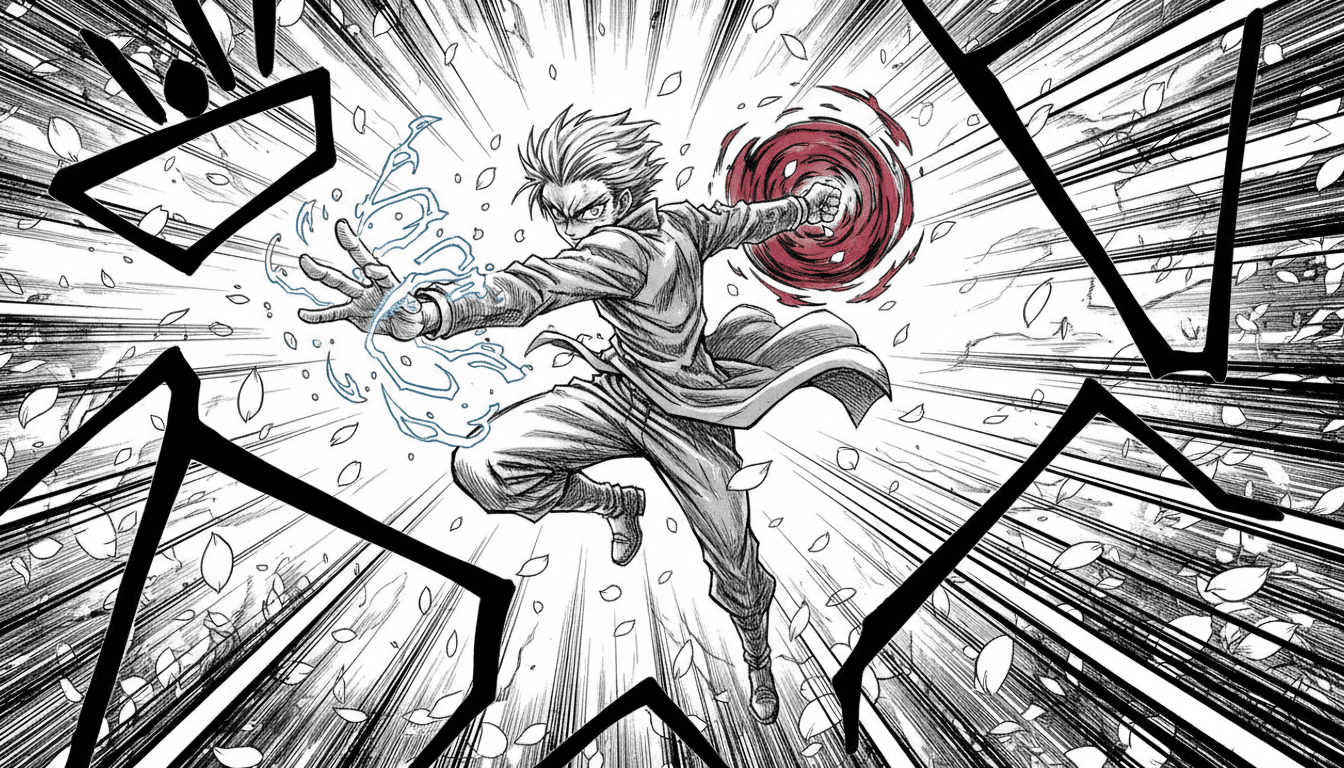
Neon noir is the closest visual relative, sharing the neon-and-darkness palette with a more grounded, present-day feel. Retro anime captures the specific 80s/90s anime cyberpunk look. Manga is excellent for character-focused cyberpunk stories that need dynamic action sequences.
Is cyberpunk good for comic stories or just single images?
Both, but cyberpunk is especially powerful for full comic stories. The aesthetic's built-in themes — corporate corruption, underground resistance, identity in a tech-saturated world — provide rich narrative material. The atmospheric visuals create immersive settings that draw readers deeper into the story with every panel.
Can I mix cyberpunk with other styles?
Absolutely. Cyberpunk backgrounds with manga-style character work is a proven combination (think Ghost in the Shell). Cyberpunk settings with retro anime character designs capture the 90s anime cyberpunk aesthetic. You can even use cyberpunk environments for scenes in an otherwise different style — showing a character entering a futuristic district of a city.
Cyberpunk is more than an art style — it's a lens for examining our relationship with technology, power, and human identity. Its neon-soaked visual language creates some of the most atmospheric and emotionally powerful comic art possible. Whether you're building a dystopian epic, a neon-noir mystery, or simply want to see your city photos reimagined as rain-soaked cyberpunk vistas, the tools are here and the neon lights are on. Step into the cyberpunk world.